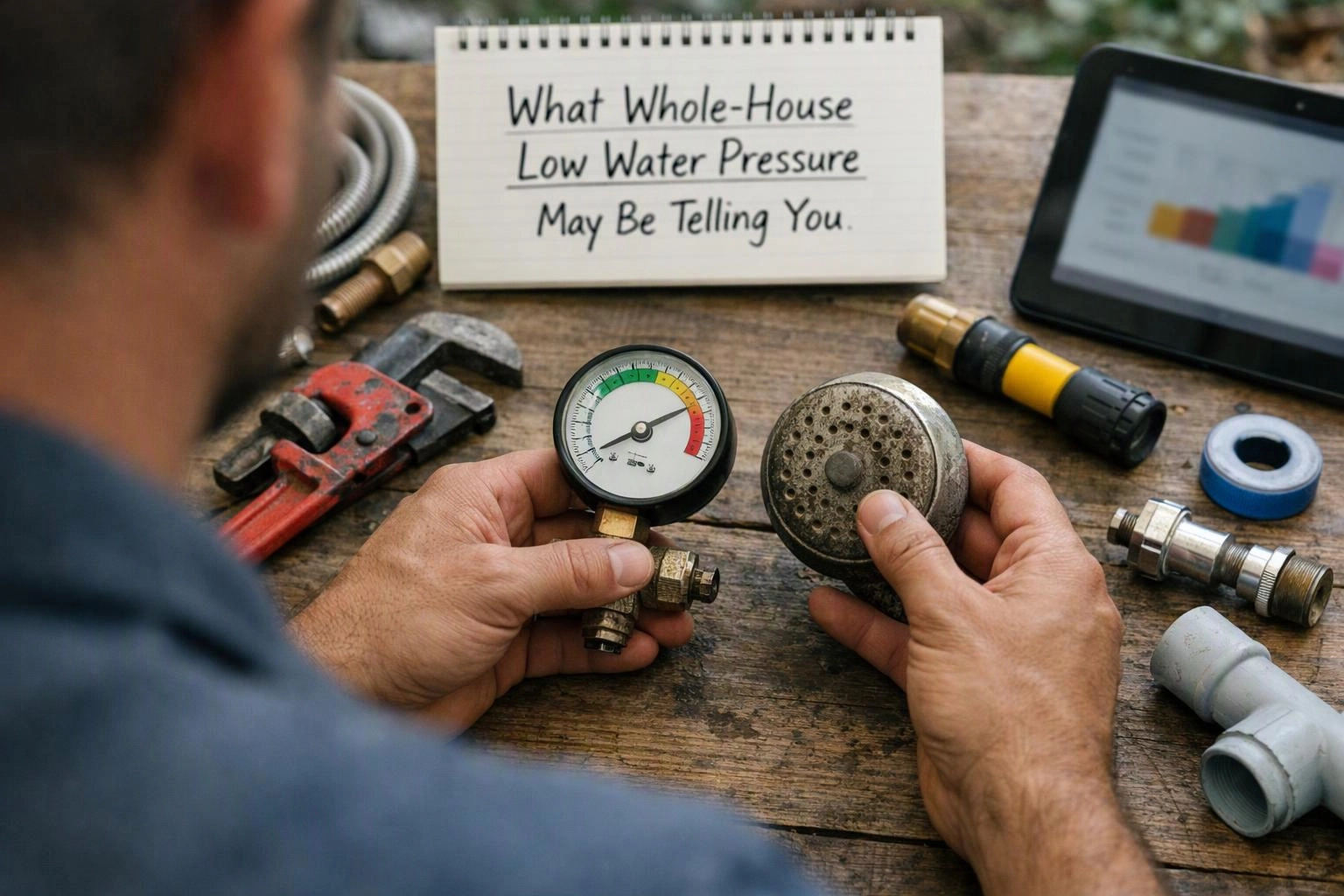
What Whole-House Low Water Pressure May Be Telling You
Whole-house low water pressure usually points to a problem affecting the main supply, pressure-control equipment, plumbing pipes, or a hidden leak. PlumbingKentwa.info checks the full water system to identify the cause and recommend water line repair, leak detection, or replacement when needed.
Request an EstimateWhat Whole-House Low Water Pressure Means
Whole-house low water pressure means the restriction or loss affects several fixtures, not just one faucet.
Water pressure is the force that moves water through your whole-house plumbing system. A problem with the main water supply, water supply line, or main water line can reduce flow throughout the home.
A pressure problem may come from a valve, pipe blockage, leak, or issue outside the property. The pattern of the symptoms helps point to the right plumbing diagnosis.
Signs That Low Water Pressure Affects the Whole House
Low water pressure throughout the house affects several water-using fixtures at the same time.
These signs suggest more than a clogged faucet aerator or showerhead.
Common Causes of Low Water Pressure Throughout a House
Low water pressure throughout a house usually comes from a restriction, leak, valve fault, or supply change.
We check the accessible parts of the system before recommending water line repair or another solution.
What a Sudden Drop in Water Pressure May Mean
A sudden drop in water pressure can signal a new leak, a failed valve, a damaged water line, or a change in the incoming supply.
A hidden water leak may appear near the meter, under the building, or along an underground water line. A broken water line can also cause pressure loss and wet soil, pooling water, or unusual meter activity.
A failed pressure-reducing valve can create a sudden pressure change without visible pipe damage. We use leak detection and valve inspection to separate these causes safely.
How Whole-House Pressure Problems Differ From One-Fixture Problems
Low pressure at one fixture usually points to that fixture or its branch pipe, while low pressure everywhere points to the main system.
The table shows how the symptom pattern changes the likely diagnostic path.
| Pressure pattern | Likely area | What we check |
|---|---|---|
| Single-fixture pressure loss | Faucet, showerhead, or branch pipe | Fixture parts and the nearby supply branch |
| Whole-house pressure loss | Main water line, valves, meter, or incoming supply | The main system and water supply line |
How We Check the Cause of Low Water Pressure
We identify the cause of low water pressure by testing the system and tracing the affected water line.
Our process helps separate a fixture issue from a main supply problem before repair work begins.
When Low Water Pressure Needs Water Line Repair or Replacement
Low water pressure needs water line repair or replacement when damage, corrosion, blockage, or leakage affects the main line.
Water line repair may suit a limited problem that leaves most of the line sound. Our team may recommend Water Line Repair when the damaged area can be safely restored.
Water line replacement may be the better path when pipe corrosion is widespread, repeated leaks have weakened the line, or an underground water line remains badly restricted. We explain the condition found, the work involved, and what the quote covers before work proceeds.
Ways to Help Prevent Whole-House Water Pressure Problems
Regular checks can help reveal water pressure problems before they cause broader plumbing damage.
These prevention steps support early awareness, but they don't replace a full inspection when flow changes across the house.
What to Do When Water Pressure Drops Across the House
When water pressure drops across the house, check for obvious valve changes and signs of leaks, then contact our team for system diagnosis.
Do not remove plumbing components or disturb electrical equipment near standing water. If water is escaping quickly or the property may be damaged, use the main shutoff valve if it is safe to reach.
We can assess the water pressure symptoms, perform leak detection, and trace the source through a structured plumbing diagnosis. Our team then explains whether the next step is Water Line Repair, a valve service, or Water Line Replacement.
Questions About Whole-House Low Water Pressure
Can a water leak cause low water pressure throughout the house?
Yes, a water leak can cause low water pressure throughout the house when it diverts water from the supply line. A hidden leak may also create damp areas, unusual meter activity, or water damage.
Should I shut off the water if pressure suddenly drops everywhere?
Yes, shut off the water when pressure suddenly drops everywhere and you see active leaking or fast water loss. Use the main shutoff valve only if it is safe to reach, then contact our team for an inspection.
Can the municipal water supply cause low pressure inside my house?
Yes, the municipal water supply can cause low pressure inside your house when incoming pressure changes or service work affects the supply. We can check the property-side plumbing and help separate an outside supply issue from a house plumbing problem.
What should I check before calling for whole-house low water pressure?
Check whether the main shutoff valve is partly closed and look for visible leaks, pooling water, or damp soil. Note whether every fixture has weak flow, because that detail helps our team plan the plumbing diagnosis.
Whole-house pressure loss can worsen when a leak or damaged line remains active.
Contact our team for a water pressure test, leak detection, and a clear recommendation for the affected system.
Request a water pressure diagnosis