What Are the Warning Signs of a Hidden Water Leak?
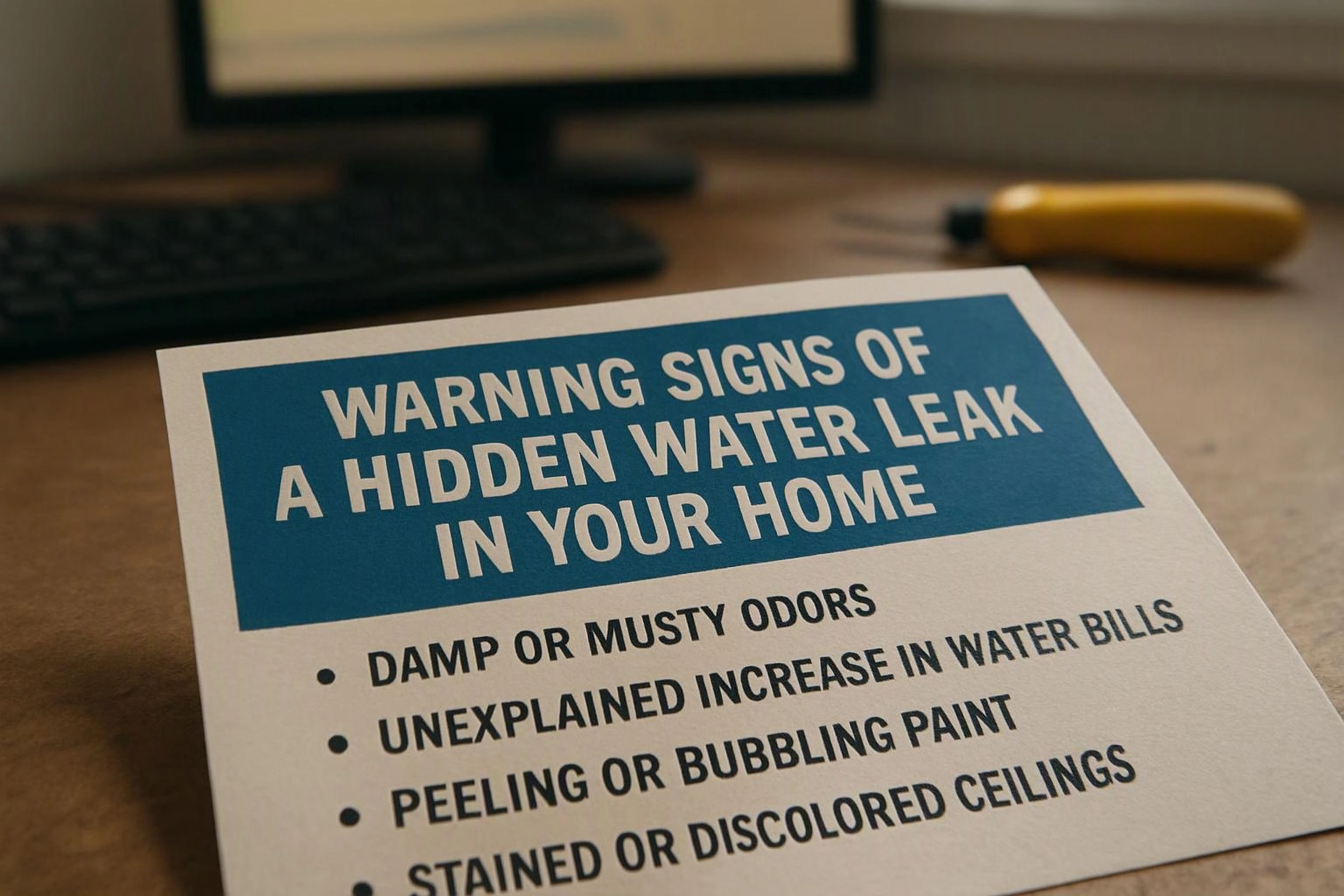
Hidden water leaks cause warning signs that point to concealed water loss or trapped moisture. Warning signs include damp areas, stains, musty odors, peeling finishes, unexpected water use, and water sounds when fixtures are off.
Check for changes that don't match normal household use. A single sign may have another cause, but several signs together need prompt attention.
These signs can appear far from the actual leak source. Our team checks the wider residential plumbing system before recommending a repair.
Why Did Your Water Bill Suddenly Increase?
A sudden water bill increase can indicate continuous water flow from a hidden plumbing leak, especially when household water habits haven't changed.
Your water meter records flow through the home’s plumbing system. If the meter shows movement while faucets and appliances are off, water may be escaping through a plumbing leak.
Review recent use before assuming the cause. Guests, outdoor watering, or a running toilet can raise the bill, but unexplained water use deserves a plumbing inspection.
Can a Hidden Leak Cause Musty Smells or Water Stains?
Yes, a hidden leak can cause musty smells and water stains because trapped moisture affects nearby building materials and indoor air.
A leak behind drywall can leave a damp spot that grows over time. Water may also travel along framing before reaching a stained ceiling or flooring.
Moisture can weaken drywall, lift finishes, and create conditions that support mold. A stain may dry on the surface while moisture remains deeper inside, so the visible mark doesn't always show the full problem.
What Can You Safely Check Before Calling for Leak Detection?
You can safely check visible surfaces, fixture areas, and water use patterns, but hidden pipe access and plumbing repairs require our team.
Look beneath sinks and around visible plumbing fixtures for dampness, stains, or unusual odors. Check cabinet interiors, appliance connections, nearby walls, and the ceiling below bathrooms or kitchens.
You can also observe the water meter when all fixtures are off. Don't open walls, remove flooring, enter unsafe ceiling spaces, or work near wet electrical equipment.
When signs point to a concealed source, our Leak Detection service helps trace the moisture without unsafe pipe access.
DIY Checks vs Calling Us for a Hidden Leak
Homeowner inspection works best for accessible signs, while we trace concealed water movement and identify the leak source.
The choice depends on visibility, safety, and whether the plumbing system continues losing water. Use the comparison below to decide when our team should take over.
| Factor | What you can do yourself | What we do |
|---|---|---|
| Visible signs | Look for stains, damp areas, smells, and surface changes. | Review the signs and connect them to the plumbing system. |
| Water use | Observe the water meter when fixtures are off. | Trace unexplained flow and narrow the likely source. |
| Moisture source | Check accessible cabinets, fixtures, walls, and ceilings. | Follow moisture movement behind finished surfaces. |
| Pipe access | Avoid cutting walls, floors, or ceilings. | Assess the concealed pipe system without unsafe access. |
| Plumbing repair | Protect the area and limit further water exposure. | Explain the repair recommendation after locating the leak. |
Safe observation can help us understand the problem. Plumbing repairs and concealed pipe work should be handled by our team.
When Should You Call for Leak Detection?
Call for leak detection when water sounds continue, stains spread, moisture returns, or the leak source isn't visible.
An active leak can cause wider water damage as it moves through walls, ceilings, and flooring. Ongoing dampness also raises mold risk and can weaken building materials.
Call our team promptly when you suspect a hidden pipe, slab leak, wall leak, ceiling leak, under-sink leak, pipe joint leak, or appliance supply leak. Treat fast water loss or unsafe electrical conditions as a plumbing emergency, and use the main water shutoff when it is safe to do so.
How We Locate a Hidden Water Leak
We inspect the reported signs, trace moisture and water movement, narrow the source, and explain the repair needed.
Our plumbing inspection starts with the visible evidence and water flow pattern. We then connect those findings to the pipe system and likely moisture source.
Our team checks whether the problem points to a fixture, connection, concealed pipe, or another plumbing component. We explain what we found and outline the repair recommendation before work begins.
What Should You Do After Finding Signs of a Leak?
After finding leak signs, protect the area, avoid unsafe access, and contact our team for leak detection.
Don't cut into a wall or ceiling to search for a hidden pipe. Our team can trace the source and help limit further water damage.
Questions About Hidden Water Leaks
Why do I hear water running when all faucets are off?
Water running when faucets are off can indicate continuous flow through a hidden plumbing leak, running toilet, or appliance connection.
Can a small hidden leak damage drywall?
Yes, a small hidden leak can damage drywall when moisture remains behind the surface or reaches the paper layer.
Can a hidden water leak cause mold?
Yes, a hidden water leak can create mold risk when trapped moisture remains in drywall, flooring, ceilings, or other materials.
Should I shut off my home's water after spotting a leak?
Yes, shut off the home's water when active flow continues and the shutoff valve is safe to reach.
Contact our team for a quote that reflects the leak's location, access, tracing needs, and recommended repair.
Contact us about leak detection