Frozen or Burst Pipe? Immediate Steps, Prevention, and Repair
If a pipe freezes, shut off the water, open a faucet, and warm the exposed pipe safely without using an open flame. If a pipe bursts, shut off the main water supply, protect nearby areas, and contact PlumbingKentwa.info for leak detection or repair. We help identify pipe damage and plan the right repair.
Request an Estimate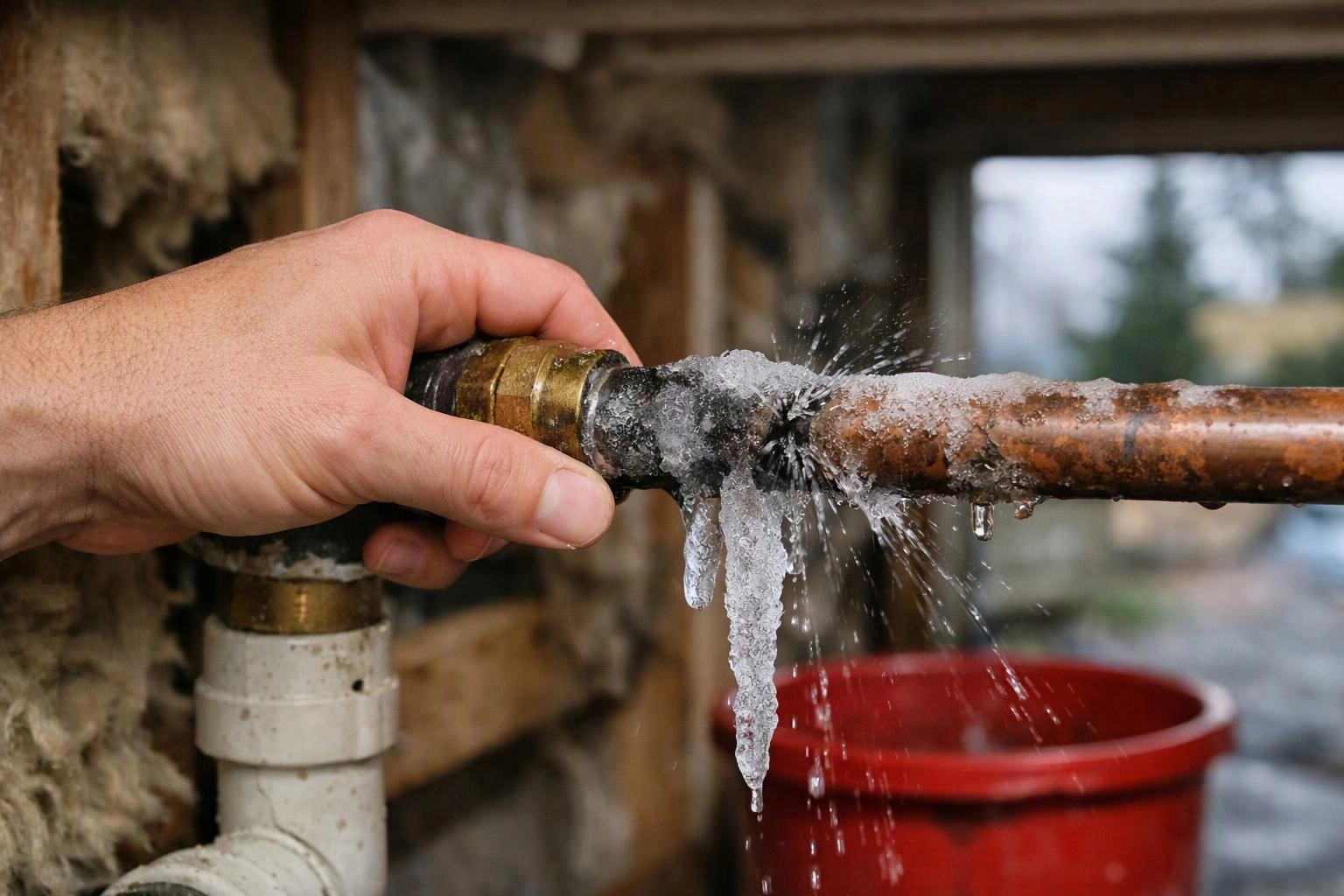
A frozen or burst pipe is a plumbing emergency that can spread water damage quickly. Protect belongings, keep away from electrical hazards, and arrange help when the problem is beyond safe access.
What Should You Do If a Pipe Freezes?
A frozen pipe needs prompt action because expanding ice can damage the pipe and cause a later leak.
Don’t force a valve that will not move. A hidden pipe freeze may need leak detection before thawing continues.
What Should You Do If a Pipe Bursts?
A burst pipe requires shutting off the water supply first, then limiting water damage and arranging repair.
Do not enter standing water near electrical equipment. Our team can isolate the damaged water line and arrange burst pipe repair.
How Do You Thaw a Frozen Pipe Safely?
A frozen pipe can be thawed with gentle, even heat only when the pipe is accessible and undamaged.
Use a safe heat source that warms the pipe gradually, such as warm air from a household hair dryer. Keep the heat moving and work toward the open faucet.
Never use an open flame, torch, or other high-heat source. Stop thawing when you see a leak, smell burning, or notice a bulging pipe.
Hidden pipes inside walls, ceilings, crawl spaces, or other tight areas need professional inspection. Our team can use leak detection to find damage without unsafe access.
How Can You Prevent Pipes From Freezing?
Pipe freezing prevention starts with insulation, steady indoor heat, and fewer cold air leaks.
Pipe insulation helps slow heat loss, but it cannot correct every freeze risk. Repeated freezing may point to poor pipe access, air leakage, or a vulnerable pipe layout.
How Can You Tell a Frozen Pipe Has Burst?
A frozen pipe may have burst when thawing brings leaks, falling water pressure, damp areas, or visible pipe damage.
Check for water near walls, ceilings, cabinets, and floors. Water stains, bulging surfaces, and a sudden drop in water pressure can signal a hidden water leak.
Unusual plumbing sounds may also point to escaping water or air in the line. Shut off the water supply if you suspect a burst, then protect nearby belongings.
When Should You Call for Frozen or Burst Pipe Repair?
Call for frozen pipe repair or burst pipe repair when a line is inaccessible, damaged, leaking, repeatedly freezing, or unsafe to reach.
Professional help is also needed when water damage reaches walls, ceilings, insulation, or electrical areas. Our team can perform leak detection when the source is hidden.
Call for emergency plumbing when water will not stop, the main shutoff cannot be found, or the damaged pipe threatens the property. You can contact our Emergency Plumbing team for guidance.
What Does Frozen or Burst Pipe Repair Include?
Frozen or burst pipe repair starts with a plumbing inspection and a clear plan for stopping the leak.
Our team checks the water shutoff, traces the affected water line, and identifies the damaged section. Leak detection helps locate hidden damage behind finished surfaces.
Repair may include pipe isolation, a fitting or pipe section replacement, or broader pipe replacement when damage extends along the line. We explain the repair scope before work begins and provide a repair quote based on the findings.
How We Check and Repair Frozen or Burst Pipes
We follow a controlled inspection process to limit further water damage and identify the correct repair.
Our team treats a frozen water line, burst water line, split pipe, or broken pipe as a plumbing damage issue that needs careful isolation and testing.
What Changes the Cost of Frozen or Burst Pipe Repair?
The cost of frozen or burst pipe repair depends on the pipe location, access, damage extent, materials, and related water damage.
A visible pipe may require less access work than a line inside a finished wall or ceiling. Pipe material, fittings, replacement scope, and the need for leak detection also shape the repair plan.
Water damage can add restoration work beyond the plumbing repair. We inspect the affected area, explain what the quote includes, and provide an exact repair quote before approved work.
Questions About Frozen and Burst Pipes
Can a frozen pipe burst after the water is turned off?
Yes, a frozen pipe can still split after the water is turned off because trapped ice and pressure may remain. Keep the faucet open and watch for leaks as the pipe warms.
Should you leave a faucet dripping to prevent frozen pipes?
Yes, a small flow from a faucet can help reduce pressure during severe cold weather. Dripping water does not replace pipe insulation, sealed air leaks, or steady indoor heat.
Can you thaw a frozen pipe with a hair dryer?
Yes, you can use a hair dryer for safe thawing when the pipe is exposed, dry, and undamaged. Keep the heat moving, avoid water and electrical contact, and never use an open flame.
What happens if a frozen pipe starts leaking?
A leaking frozen pipe needs the water supply shut off immediately. Protect nearby belongings, avoid electrical hazards, and contact us for leak detection and repair.
Can a burst pipe be repaired without replacing the whole line?
Yes, a burst pipe can sometimes be repaired by isolating and replacing the damaged section. Our inspection determines whether nearby pipe material, joints, or repeated damage require broader replacement.
Request a repair quote when a frozen or burst pipe threatens your home or cannot be reached safely.