Trenchless Sewer Repair vs. Excavation: Comparing the Work
Trenchless sewer repair usually limits digging and surface disruption, while excavation exposes the sewer line for direct replacement or repair. PlumbingKentwa.info compares both methods so you can match the work to the pipe condition, access, and property risks.
Request an EstimateHow Trenchless Sewer Repair and Excavation Differ
Trenchless sewer repair is a sewer line repair method that uses small access points instead of opening the full route. Pipe lining and pipe bursting can restore or replace a sewer pipe with less surface disruption.
Excavation uses an open trench to expose the sewer line and surrounding soil. This approach gives our team direct access for sewer line replacement, damaged sewer connections, or changes to the pipe route.
The right choice depends on access points, pipe condition, alignment, soil conditions, and surface features. We review those factors before recommending repair or replacement.
Trenchless Sewer Repair vs. Excavation at a Glance
Trenchless sewer repair usually reduces digging and restoration work, while excavation provides direct access to the full pipe and surrounding soil. The better option depends on pipe damage, alignment, access, soil conditions, and surface features.
Both methods can solve sewer problems when the selected work matches the sewer line condition. The project cost drivers also differ because surface restoration, access, materials, and repair limits change the scope.
| Factor | Trenchless sewer repair | Excavation | Best-fit focus |
|---|---|---|---|
| Project cost drivers | Access, lining or bursting method, preparation, and pipe condition | Digging, soil support, pipe materials, access, and restoration | The option with the smaller overall work scope |
| Work time | Often involves less surface preparation and restoration | Requires open trench work and site restoration | The method that fits the pipe and property |
| Maintenance | Depends on the installed lining or replacement pipe and sewer flow | Depends on the new pipe, connections, grade, and surrounding soil | The completed system and its condition |
| Property disruption | Usually less digging and less landscape or driveway disruption | More open digging and greater surface restoration needs | Properties where access and surface features matter |
| Pipe condition | Usable route with damage suited to the selected method | Severe collapse, poor alignment, or major connection damage | The method supported by inspection findings |
What Are the Advantages of Trenchless Sewer Repair?
Trenchless sewer repair can be a strong choice when the existing route is usable and the pipe can support a trenchless method. We select pipe lining or pipe bursting only after checking the line and access conditions.
Best for: Suitable sewer lines where preserving much of the surface is a priority.
What Are the Advantages of Excavation?
Excavation can be the better choice when the pipe needs direct access, the route must change, or trenchless methods aren't suitable. Our team can view the pipe, connections, bedding, and surrounding soil during open trench work.
Best for: Severely damaged, poorly aligned, inaccessible, or replacement projects that require open access.
When Is Trenchless Sewer Repair an Option?
Trenchless sewer repair is an option when inspection shows a usable route, suitable access, and pipe damage that the selected method can address. We inspect the line before recommending lining, bursting, or excavation.
A sewer camera inspection helps us assess pipe diameter, alignment, cracks, leaks, root intrusion, and blockages. The findings also show whether access points can support the work.
Cured-in-place pipe lining may suit a pipe with a stable route and repairable damage. Pipe bursting may suit a replacement where the route and surrounding conditions support the installation.
When Does Excavation Make More Sense?
Excavation makes more sense when the pipe cannot support trenchless work or when the sewer route, grade, or connections need major changes. We explain the reason for that recommendation and the restoration work it requires.
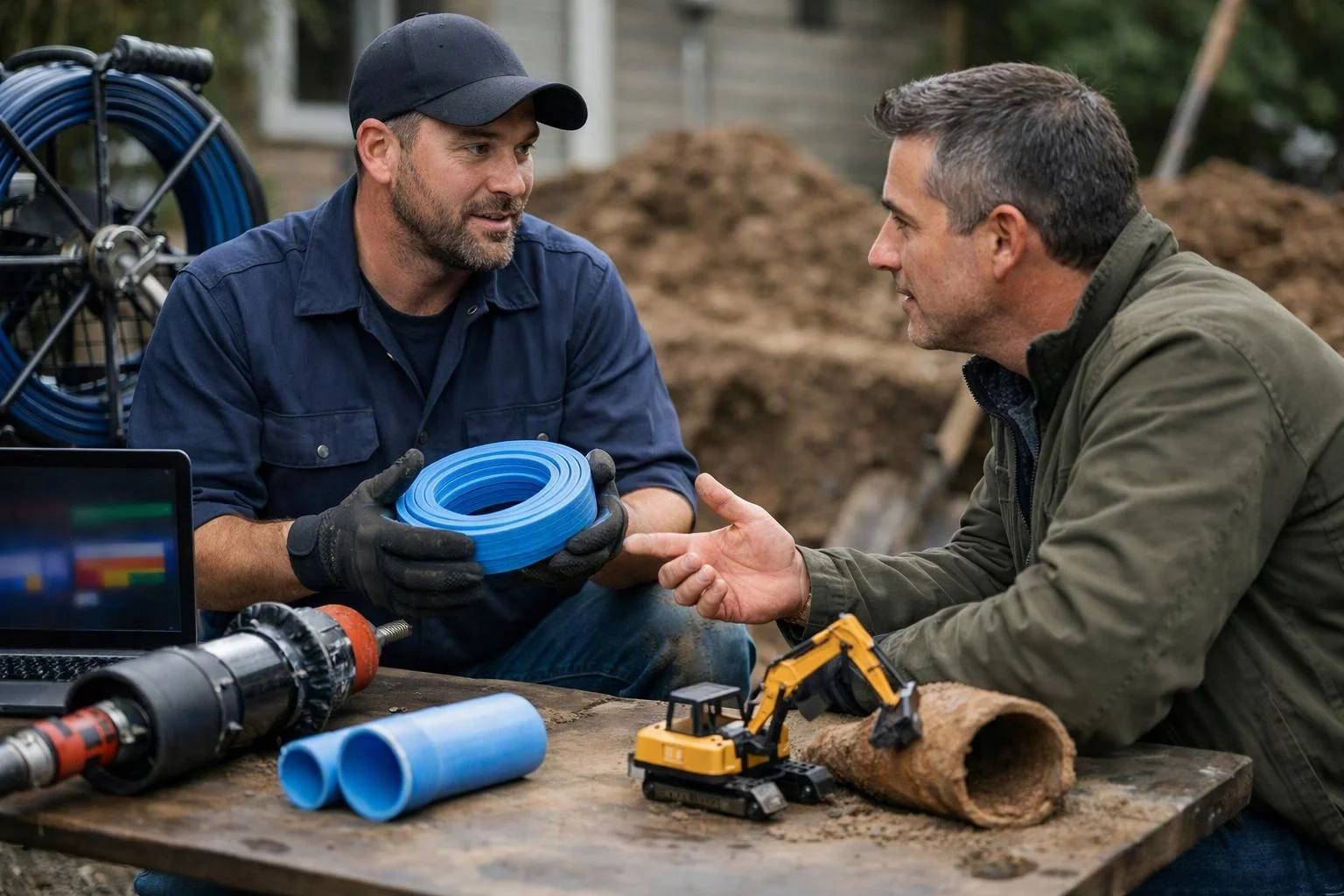
Severe pipe collapse, a misaligned sewer line, or inadequate pipe size can limit trenchless options. Multiple damaged sections may also make direct access more practical.
Shallow utilities, unstable soil, or a needed new sewer route can affect the safe installation plan. Our team considers these conditions before we define the replacement scope.
Is Trenchless Sewer Repair Cheaper Than Excavation?
Trenchless sewer repair can reduce restoration-related work, but the lower-cost option depends on the pipe, access, method, and property surface. We base the quote on the actual inspection and work scope.
Excavation cost can include digging, soil handling, pipe installation, connection work, and surface restoration. Trenchless project cost can include cleaning, access work, lining or bursting materials, testing, and any needed repairs.
Landscaping, pavement, property access, pipe condition, and surface restoration can change the comparison. We explain what the quote includes so you can compare the repair scope with the replacement scope.
What Should a Sewer Repair or Replacement Quote Include?
A sewer repair or replacement quote should connect the inspection findings to a clear method and complete work scope. Our written quote should make the planned work and exclusions easy to review.
Ask our team to explain any item that could change the repair or replacement scope. A clear quote helps prevent confusion about restoration and testing.
How We Decide Between Repair and Replacement
PlumbingKentwa.info reviews the inspection, pipe condition, access, and property impact before we recommend repair or replacement. Our trenchless sewer repair service explains the method and project factors in more detail.
Our team compares the repair scope with the replacement scope. We also check sewer connections, pipe alignment, pipe diameter, and the risks of surface disruption.
The recommendation must fit the pipe and the property. We don't select a trenchless method when the line needs open access or a different route.
What Should You Expect During the Work?
Our team inspects and prepares the sewer line before installation or replacement, then checks flow and the completed work. Plumbing work beyond safe homeowner tasks should be handled by PlumbingKentwa.info.
The process can include sewer inspection, site preparation, pipe cleaning, and either trenchless installation or open trench work. We follow the approved work scope and address access and site safety before installation.
After the work, our crew completes flow testing and reviews the result. Site restoration depends on the surfaces opened during the project.
Questions About Trenchless Repair and Excavation
Can trenchless sewer repair fix a collapsed pipe?
Trenchless sewer repair may not suit a fully collapsed pipe because the route may not support installation. Our sewer camera inspection determines whether repair is possible or excavation is needed.
Does trenchless sewer repair work under a driveway?
Trenchless sewer repair can work under a driveway when the pipe route, access, damage, and installation method are suitable. The method may reduce driveway disruption, but inspection must confirm the plan.
What types of trenchless sewer repair are available?
Pipe lining and pipe bursting are the main trenchless sewer repair options discussed for suitable lines. Pipe lining installs a cured-in-place pipe, while pipe bursting replaces the existing pipe along a supported route.
Will excavation be needed for every sewer line replacement?
Excavation won't be needed for every sewer line replacement because pipe bursting can replace a suitable line through access points. Our inspection decides whether trenchless work can meet the replacement needs.
What is the difference between sewer repair and sewer replacement?
Sewer repair restores part or all of a damaged sewer pipe, while sewer replacement installs a new pipe or liner. The sewer line condition, damage pattern, and route determine which scope fits.