Backflow Prevention: Devices, Testing, and What to Verify
Backflow testing checks whether a backflow preventer still protects clean water from contamination, while installation matches the device to the hazard. At PlumbingKentwa.info, we explain what we inspect, what test results show, and what to verify before service.
Request an EstimateWhat Is a Backflow Preventer?
Backflow prevention protects potable water by stopping contaminated water from moving into the clean water supply. A backflow preventer is a plumbing safety device that blocks reverse flow during unsafe pressure conditions.
Backflow can happen through a cross-connection between drinking water and another system. Backpressure pushes water toward the supply when downstream pressure rises. Backsiphonage can pull water backward when supply pressure drops.
Device selection depends on the contamination hazard and the pressure conditions. Our team checks the plumbing layout before recommending backflow preventer installation.
How Backflow Testing Protects the Water Supply
Backflow testing checks whether the assembly responds correctly under conditions that could reverse water flow. The test shows whether the device still provides water supply protection.
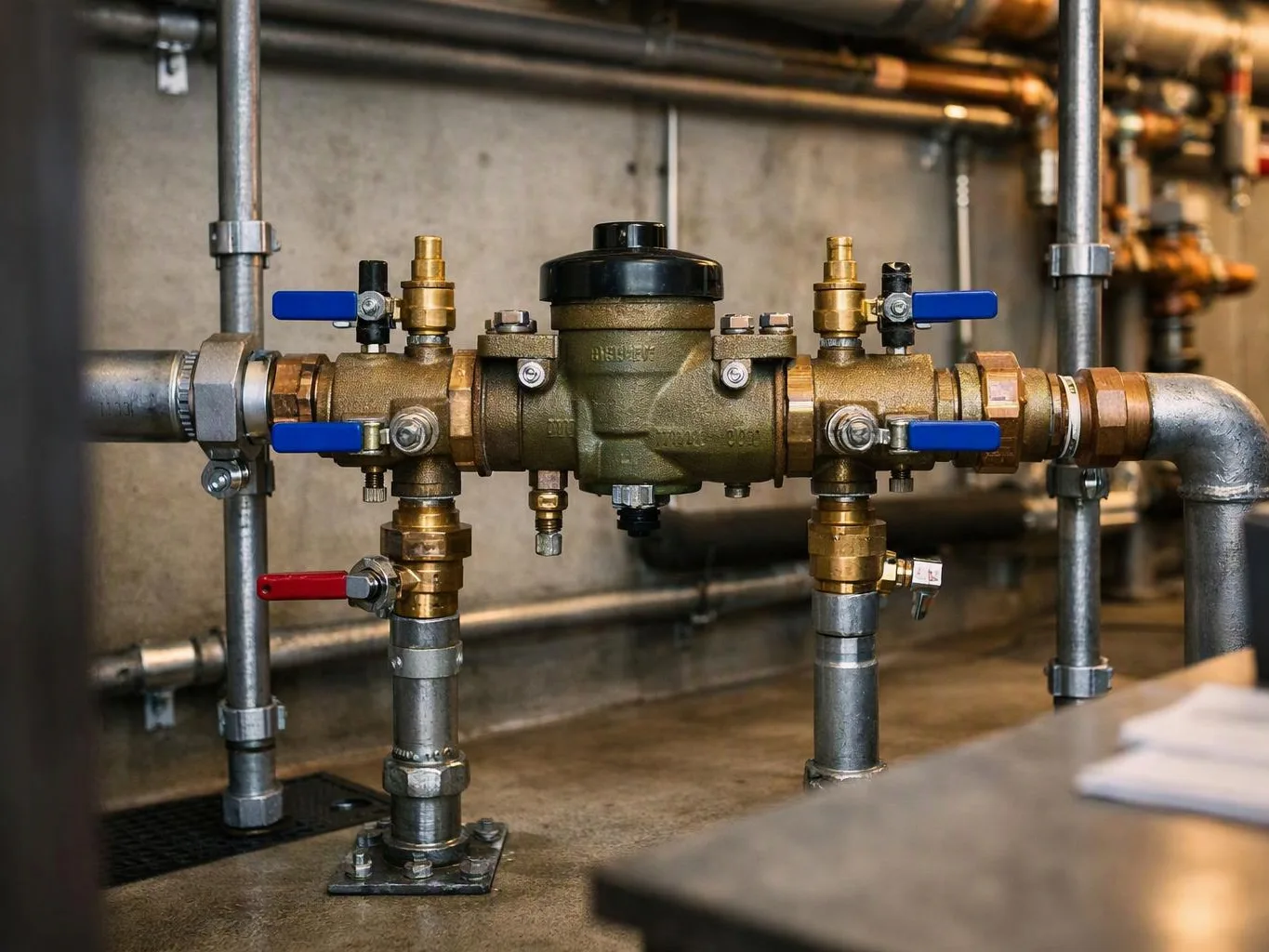
We use the test cocks and shutoff valves to evaluate the assembly. We check the check valves, relief valve, and differential pressure readings. These results help show whether internal parts are working as intended.
Testing is not only a visual check. The test equipment measures how the assembly responds, and the results become part of the test report. Our Backflow Testing process focuses on clear findings and useful documentation.
Which Types of Backflow Preventers Are Used?
Backflow preventer types serve different hazards and installation conditions. The correct choice depends on the cross-connection risk, system design, and applicable inspection criteria.
| Device | How it protects water | Common selection factor |
|---|---|---|
| Air gap | Leaves a physical space between the water outlet and receiving vessel. | Used when the layout allows physical separation. |
| Reduced pressure principle assembly | Uses check valves and a relief valve to control higher contamination risks. | Chosen when the hazard requires stronger cross-connection control. |
| Double check valve assembly | Uses two check valves to limit reverse flow. | Used for suitable lower-hazard applications. |
| Pressure vacuum breaker | Limits backsiphonage by introducing air when pressure drops. | Requires proper placement and operating conditions. |
| Spill-resistant vacuum breaker | Provides vacuum protection with a design that limits discharge. | Selected when the application needs compact vacuum protection. |
These devices aren't interchangeable in every plumbing system. Our team matches device selection to the hazard, water pressure, access, and approved installation method.
When Should a Backflow Assembly Be Inspected or Tested?
A backflow assembly should be inspected or tested when it is installed, changed, repaired, damaged, or subject to applicable water-system requirements.
Testing may also be needed after relocation or a water system change. The right backflow test schedule depends on the authority, device, hazard, and system rules that apply.
We review the installation and available testing records before service. A licensed tester should perform regulated testing and complete the required test report.
Why Does a Backflow Assembly Need Regular Testing?
Regular backflow testing helps confirm that internal parts still protect the water supply after wear, debris, corrosion, or pressure changes.
Assembly performance can change even when the device looks normal from outside. A stuck check valve, weakened spring, or damaged diaphragm can increase cross-connection risk.
Regular testing creates useful testing records and can reveal repair needs before the protection problem grows. The applicable authority may set the testing schedule for the water system.
What Happens During a Backflow Test?
A backflow test combines a visual inspection with measured checks of the assembly’s operating parts. Our team records the findings so you can see whether the device passed or needs repair.
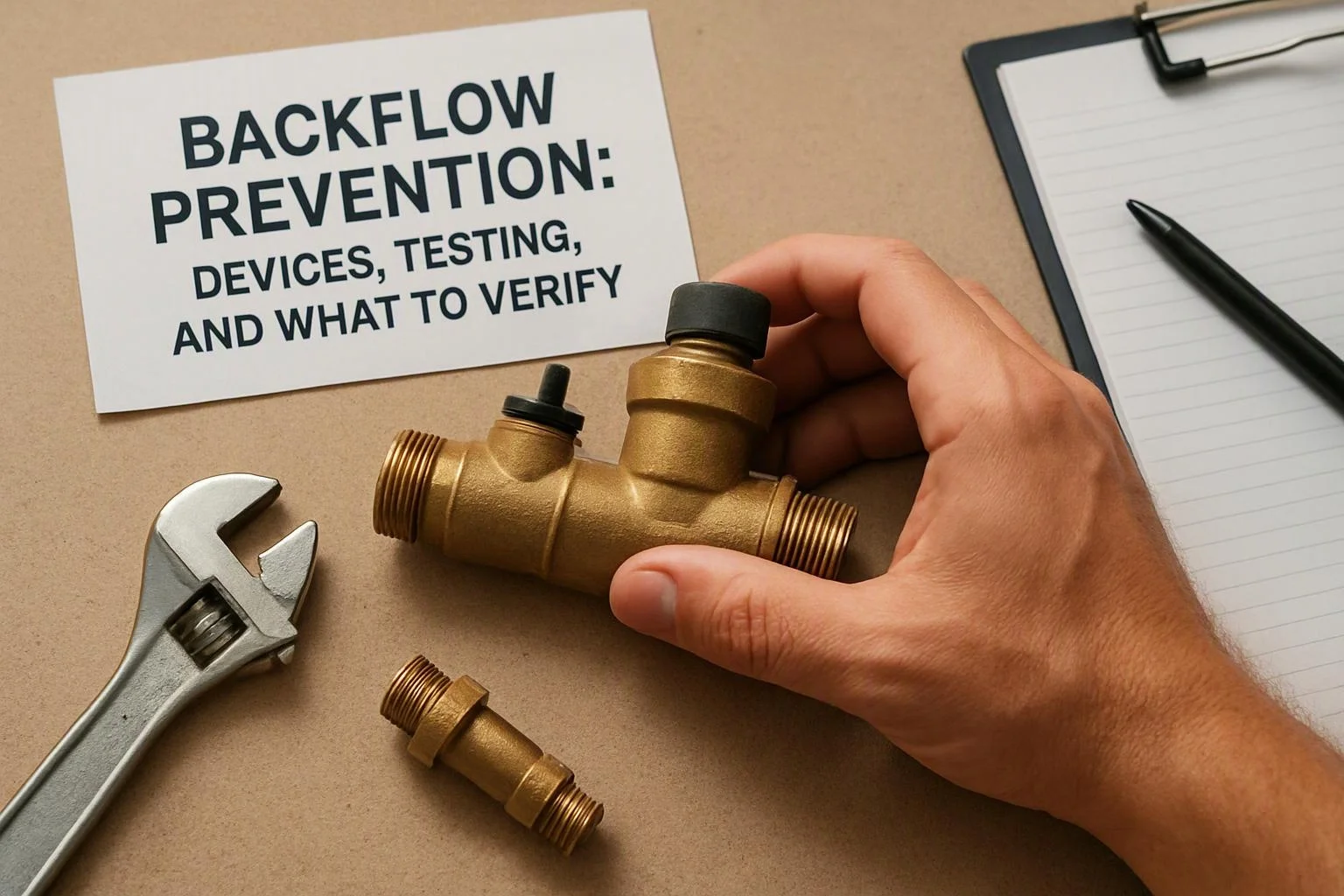
Testing should be completed by an appropriately qualified person under the applicable rules. We don't recommend taking apart a regulated assembly without the required training and equipment.
What Should You Verify Before Backflow Service?
Before backflow service, verify the device information, access conditions, records, and requested scope. These details help our team prepare an accurate assessment.
Good records help connect the test result to the correct assembly. Our team can explain what the device needs before work begins.
When Does a Backflow Preventer Need Repair or Replacement?
A backflow preventer needs repair or replacement when testing shows failed protection or inspection finds damage that prevents reliable operation.
A leaking relief valve, stuck check valve, damaged shutoff valve, or heavy corrosion can affect performance. Debris and worn internal parts may also cause a failed backflow test.
Repair is appropriate when compatible parts can restore safe operation. Replacement may be needed when the body is damaged, parts are unavailable, or the device no longer fits the application.
Our team checks replacement compatibility, connection details, access, and hazard requirements before recommending a new assembly.
How We Handle Backflow Testing and Installation
Our backflow testing and backflow preventer installation process connects device assessment, documented results, and clear service recommendations.
Our process keeps the test result separate from any repair recommendation. That distinction helps you understand what the assembly showed and what work may follow.
What Changes the Cost of Backflow Work?
The cost of backflow work depends on the assembly type, access, testing needs, installation changes, and repairs found during inspection.
Complex installation access can require more preparation. Costs can also change when the device needs compatible repair parts, new connections, relocation, or replacement.
Testing requirements affect the service scope because some work includes documentation or follow-up testing. We review these factors and provide an exact quote before approved work begins.
Use our contact page to request a quote based on your assembly and service needs.
Common Backflow Testing Questions
Backflow questions often concern failed tests, leaks, records, and the best device for a plumbing system. The answers below explain what our team checks and what you should keep.
A test result is only one part of water contamination protection. Device selection, installation condition, access, and follow-up repairs also matter.
Questions About Backflow Devices and Testing
Who can test a backflow assembly?
Backflow assemblies should be tested by an appropriately qualified person who follows the applicable water-system requirements. We use suitable test equipment and provide a test report for the work completed.
What should happen if a backflow preventer fails its test?
A failed backflow test should lead to a clear review of the assembly, possible repair, and follow-up testing when required. We explain the failed result and check whether compatible repair parts or replacement are appropriate.
Can a backflow preventer leak during normal operation?
Yes, a backflow preventer can leak when a relief valve, check valve, seal, or internal part has a problem. We inspect the leak and test the assembly before recommending repair or replacement.
What records should I keep after backflow testing?
Keep the test report, device identification, recorded results, service date, and repair or replacement details. These testing records help show the assembly’s condition and support future inspections.
How do I know which backflow preventer fits my plumbing system?
The correct backflow preventer depends on the application hazard, pressure conditions, installation layout, and applicable requirements. We assess the system and match the device to the needed level of cross-connection protection.