
What Is a Pressure Switch?
A pressure switch is an electrical control that starts or stops equipment when fluid pressure reaches a set point. The switch senses pressure through a diaphragm or similar part, then opens or closes its electrical contacts. Plumbing systems may use pressure switches with pumps, tanks, or controls that depend on steady pressure.
Quick Facts About Pressure Switch
Category
Pump control component
Used for
Starting or stopping pressure-based equipment
Common confusion
Often confused with a float switch
Also called
Pressure control switch, Pump pressure switch
Often discussed with
Sump Pump Repair
Key Takeaways About Pressure Switch
- Pressure switches respond to fluid pressure, not water level.
- A sump pump usually relies on a float switch.
- A pressure switch isn't the same as a pressure reducing valve.
How Pressure Switch Works
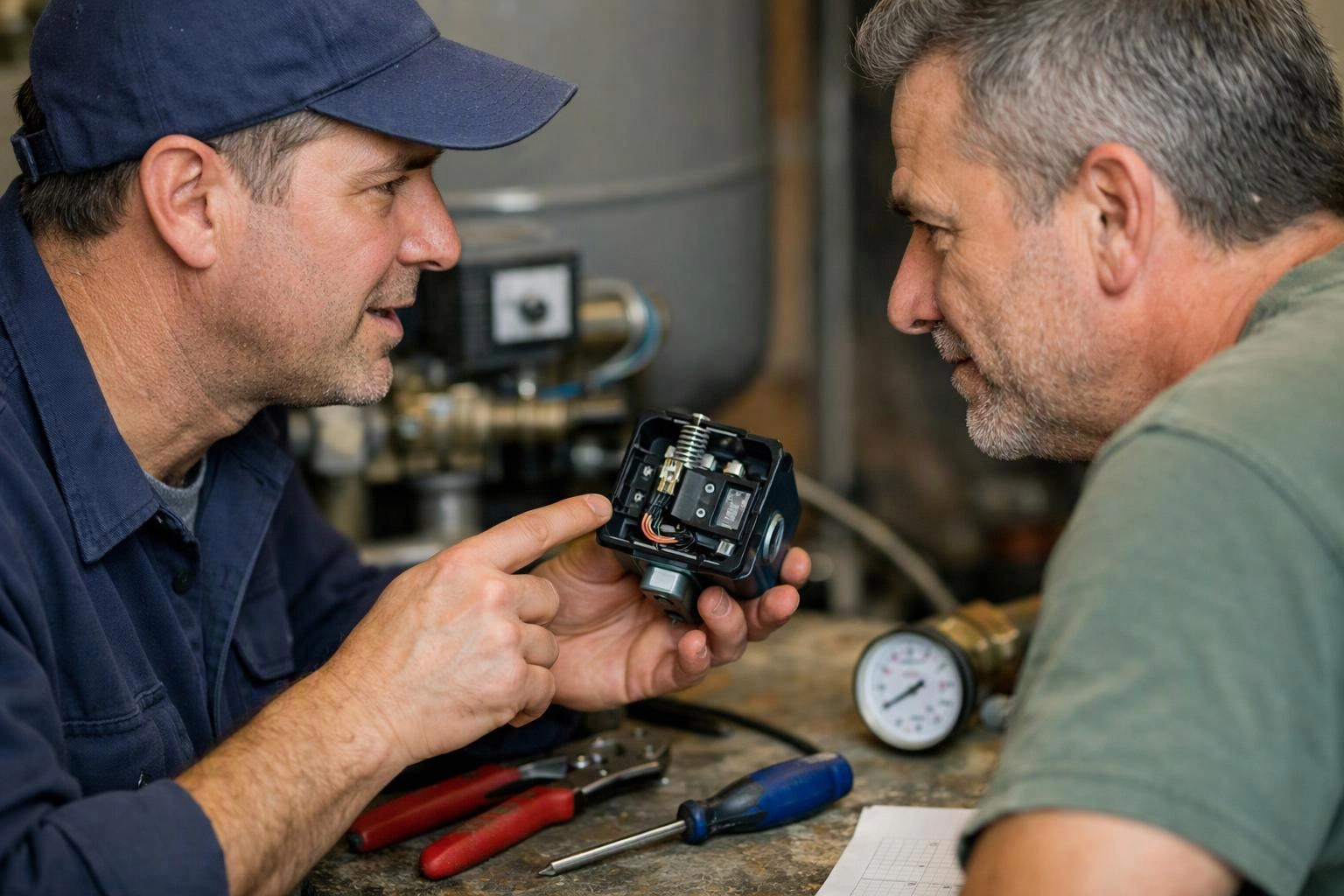
A pressure switch senses pressure in a water line or tank. Pressure pushes against an internal diaphragm or piston. When pressure reaches the switch's set point, electrical contacts change position. That action can start or stop a pump.
Related glossary terms: Float Switch, Pressure Reducing Valve, Expansion Tank.
The switch responds to pressure, while a float switch responds to water level. This difference matters during sump pump repair. A standard sump pump usually starts when rising water lifts a float. A pressure switch belongs to a different control method and may appear in connected pump equipment.
A technician checks the switch, wiring, tubing, and pressure changes together. A stuck contact, damaged sensing part, or blocked pressure path can keep equipment from responding correctly. Testing the control helps separate a switch problem from a pump or power problem.
Expert Note
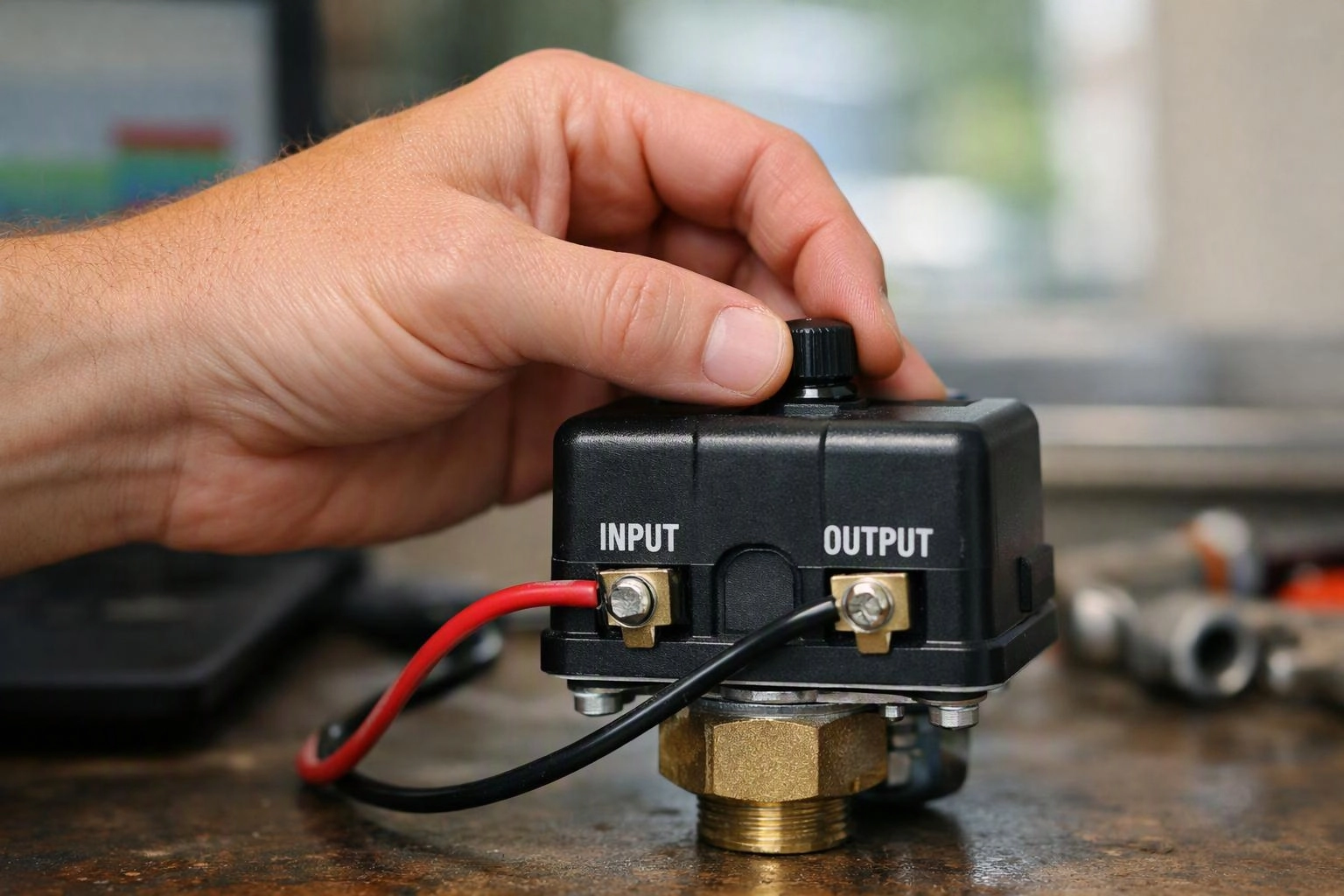
When we inspect sump pump equipment, we identify the control type before testing it. We check whether the system uses a pressure switch, a float switch, or another control. That distinction helps us trace the fault without treating a water-level problem as a pressure problem.
Pressure Switch in Practice: A Real-World Example
A sump pump system may appear to have a pressure switch when the actual control is a float switch. During a repair, we check which part starts the pump as water rises and test that control with the pump and power supply.
Related Services
Related Terms
Float Switch
A float switch is a water-level control that starts or stops equipment as a float rises…
Pressure Reducing Valve
A Pressure Reducing Valve is a plumbing control that lowers high incoming water pressure to a…
Expansion Tank
An expansion tank is a small vessel connected to a water heater that absorbs pressure from…
Leak Sensor
A leak sensor is a small device that detects unwanted water and sends an alert when…
PlumbingKentwa.info
Have Questions About Pressure Switch?
Contact PlumbingKentwa.info for practical guidance on Pressure Switch and related plumber work in Kent.