
What Is Hydrostatic Testing?
Hydrostatic Testing is a plumbing inspection method that uses water pressure to check whether a pipe system holds pressure without leaking. A technician isolates the section, fills it with water, and watches the pressure reading. In sewer line work, the test helps show whether buried piping may have leaks, breaks, or open connections.
Quick Facts About Hydrostatic Testing
Category
Plumbing inspection method
Used for
Checking pipe tightness
Common confusion
It is not the same as a camera inspection
Also called
Pressure Testing, Hydro test
Often discussed with
Sewer Line Repair
Key Takeaways About Hydrostatic Testing
- It tests pipe tightness with water pressure.
- The tested section must be isolated.
- A pressure drop does not identify the exact defect.
How Hydrostatic Testing Works
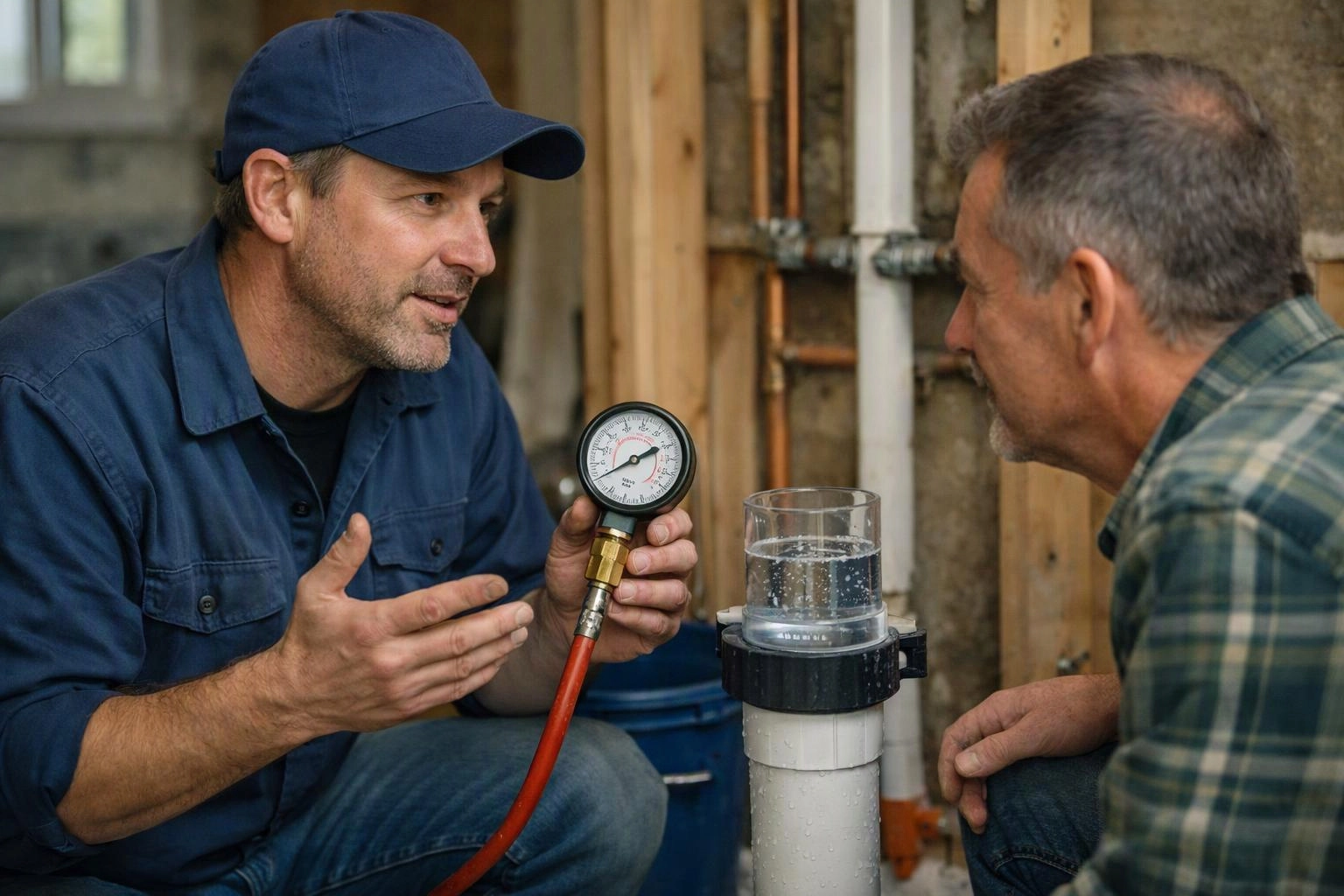
Hydrostatic Testing starts with isolating the pipe section being checked. A technician closes or seals openings, fills the section with water, and connects a pressure gauge. The gauge shows whether the water pressure stays steady during the test.
Related glossary terms: Sewer Camera, Sewer Lateral, Sewer Pipe.
A stable reading supports the view that the tested section is holding water. A falling reading points to water escaping through a leak, break, open joint, or connection. The test may show that a problem exists, but it may not show the exact location.
For sewer line repair, technicians may pair this test with a sewer camera inspection. The camera can show roots, cracks, separated joints, or other physical conditions inside the pipe. Hydrostatic testing checks tightness, while camera inspection shows the pipe's interior.
Expert Note
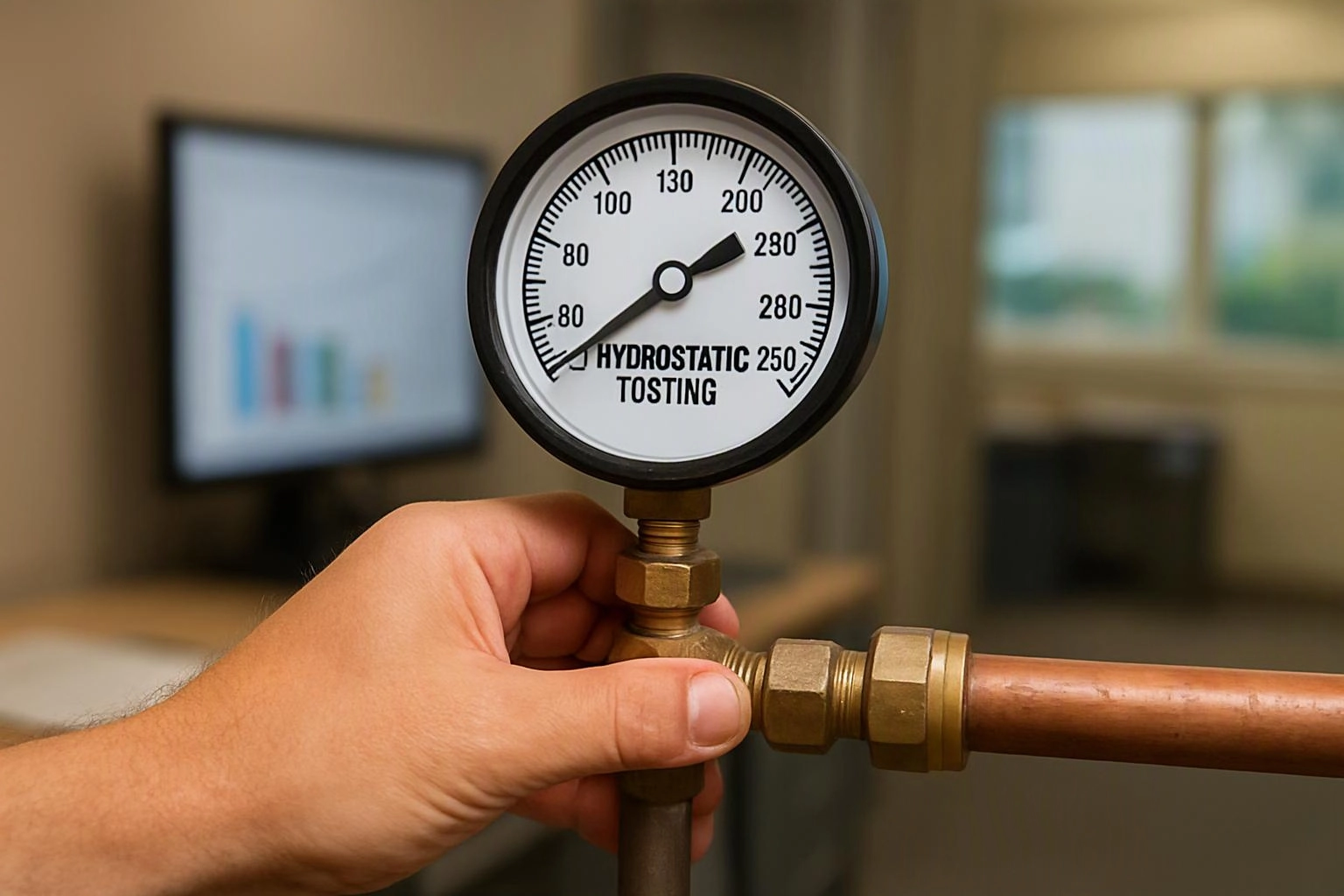
When we use hydrostatic testing, we isolate the sewer section before adding water and checking the pressure reading. We compare the result with the pipe's condition and the job findings. A pressure loss helps guide the repair plan, but we use visual inspection to locate the defect.
Hydrostatic Testing in Practice: A Real-World Example
A homeowner has signs of a leaking sewer lateral beneath a yard. We isolate the line, fill it with water, and monitor the pressure. A loss suggests the section needs closer inspection before sewer line repair begins.
Related Services
Related Terms
Sewer Camera
A Sewer Camera is a flexible inspection tool with a small camera on its end. A…
Sewer Lateral
Sewer Lateral is the underground pipe that carries wastewater from a building's plumbing to a public…
Sewer Pipe
A sewer pipe is a buried or exposed pipe that carries wastewater from a building to…
Root Intrusion
Root Intrusion is a sewer pipe problem in which tree or shrub roots enter through cracks…
PlumbingKentwa.info
Have Questions About Hydrostatic Testing?
Contact PlumbingKentwa.info for practical guidance on Hydrostatic Testing and related plumber work in Kent.