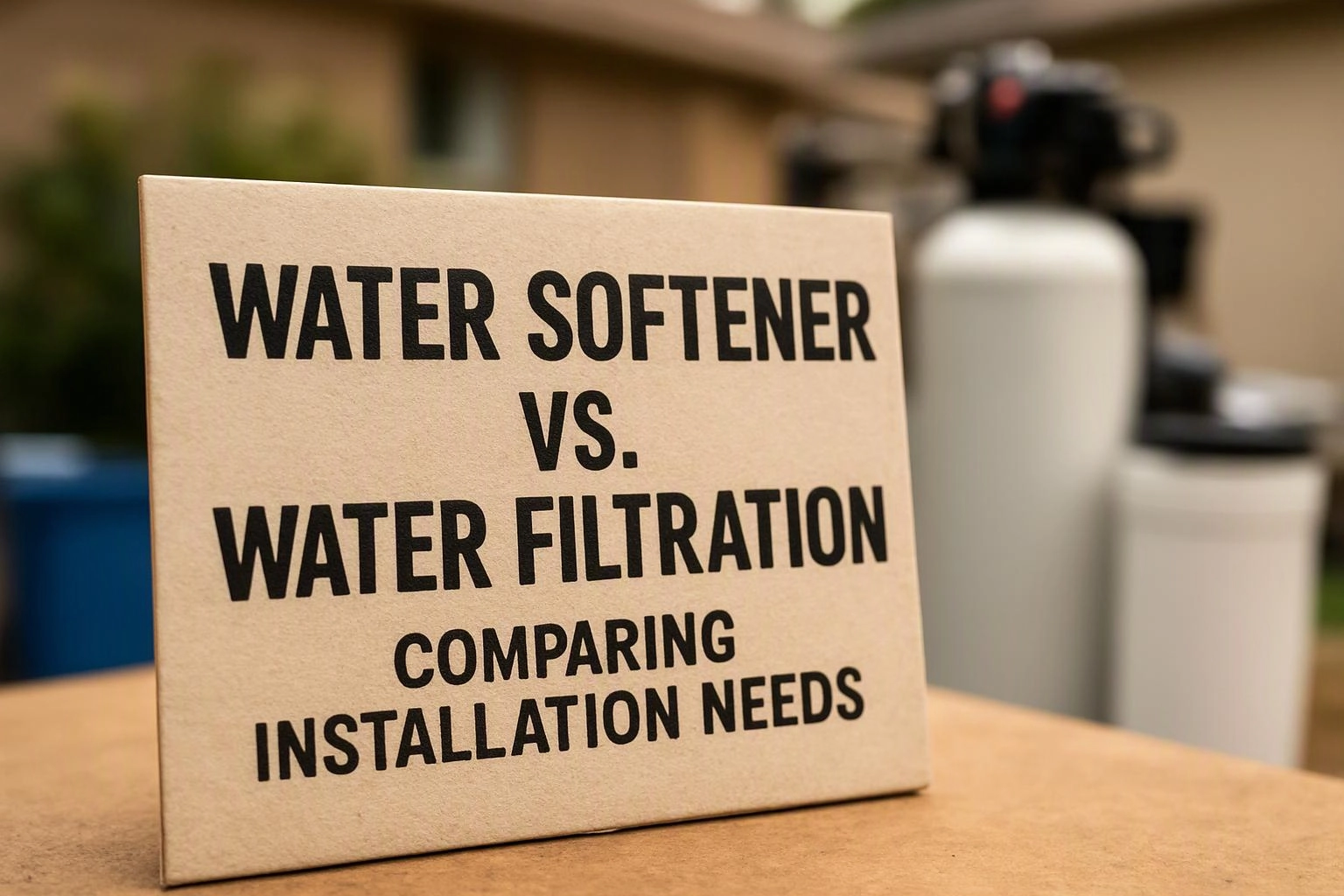
Water Softener vs. Water Filtration: Comparing Installation Needs
Water softeners treat hardness through ion exchange, while filtration systems remove or reduce selected contaminants. PlumbingKentwa.info compares connections, drainage, maintenance, placement, and quote requirements so you can choose the right installation.
Request an EstimateWhat’s the Difference Between a Water Softener and a Water Filter?
Water softener equipment is a water treatment system that reduces hardness through ion exchange. Hard water contains minerals that can leave scale buildup on plumbing fixtures and water heaters.
A water filtration system is a treatment system that targets selected contaminants. Filter media can reduce sediment, chlorine taste and odor, or other substances when the equipment matches the water quality concern.
The main difference is the treatment objective. A softener addresses water hardness, while a filter addresses specific contaminants.
Water Softener vs. Water Filtration System Installation at a Glance
Water softener installation usually needs space, plumbing connections, a drain path, and regeneration support. Filtration installation depends on the filter type, treatment goal, and water flow needs.
Both systems need careful equipment placement and reliable access for maintenance. Our team reviews the installation area before we explain the quote.
| Factor | Water Softener | Water Filtration System | Installation Focus |
|---|---|---|---|
| Best for | Hard water and scale control | Selected taste, odor, sediment, or contaminant concerns | Match equipment to the treatment objective |
| Connections | Main water line, bypass valve, and drain connection | Main water line or point-of-use connection | Check plumbing access and water pressure |
| Maintenance | Salt care, settings, and regeneration checks | Filter replacement and housing inspection | Keep service access clear |
| Cost factors | Equipment type, capacity, drainage, and plumbing changes | Filter type, treatment capacity, housings, and connections | Site conditions and included work affect the quote |
What a Water Softener Installation Needs
A water softener installation needs a suitable connection to the main water line, room for the equipment, and a safe way to discharge regeneration water.
A salt-based softener usually includes a water softener tank and a brine tank. The system also needs a bypass valve, a drain connection, and settings that match household water use.
The regeneration cycle uses the drain line to discharge water. Our team checks the drain route and connection before system startup.
Water Softener Advantages and Best-Fit Uses
A salt-based water softener is best suited to homes where hard water affects fixtures, appliances, or daily cleaning.
Best for: households whose main concern is water hardness and scale buildup.
What a Water Filtration Installation Needs
A water filtration installation needs equipment matched to the target contaminant, available space, water flow, connection points, and filter replacement access.
A whole-house water filter connects to the main water line and treats water entering the plumbing system. A point-of-use filter serves one location, such as an under-sink filter at a kitchen faucet.
Filter housing size, cartridge filter design, and water pressure all affect performance. Sediment filter and carbon filter choices should match the water test and treatment objective.
Water Filtration Advantages and Best-Fit Uses
A water filtration system is best suited to homes with a defined taste, odor, sediment, particulate matter, or contaminant concern.
Best for: households with a specific water quality concern that hardness treatment won't address.
Which System Fits Your Water Problem?
A water softener fits hardness problems, while a water filtration system fits specific taste, odor, sediment, or contaminant concerns.
A water test helps identify water hardness and other water quality concerns. Our team uses the treatment objective, household water use, and water flow needs to guide equipment selection.
Whole-house treatment makes sense when the concern affects the plumbing system. Point-of-use treatment may fit a problem limited to one faucet or drinking water outlet.
Some homes may need both systems. A softener can address hardness, while filtration can target a separate contaminant.
What Changes the Installation Cost of Each System?
Installation cost depends on the equipment selected, plumbing access, required connections, drainage, electrical needs, and the condition of the installation area. We review those conditions and explain what our quote includes before work begins.
Equipment type and treatment capacity affect the work involved. Plumbing access, pipe modifications, drain routing, and maintenance access can also change the installation requirements.
Water testing may guide equipment selection, while an electrical outlet may be needed for certain controls. Request an installation quote from our team after we review the site and treatment goal.
What Should a Water Treatment Installation Quote Include?
A useful installation quote should identify the selected equipment, included connections, site work, startup checks, maintenance guidance, and any excluded work.
Questions to Ask Before Installing a Water Softener
Before installing a water softener, ask how the water hardness, system capacity, salt use, drain needs, and settings fit your home.
For existing equipment problems, our Water Softener Repair service can address leaks, settings, valves, and operation concerns.
How We Check the Installation Before Completion
PlumbingKentwa.info checks connections, valves, flow, drainage, and system operation before we complete the installation.
Our team performs a leak inspection around each plumbing connection and checks the shutoff valves. We also test bypass operation and confirm that water flow remains suitable.
For softeners, we review regeneration settings and drain discharge. For filters, we inspect the filter housing and confirm correct cartridge placement during the system startup check.
Choose the Treatment That Matches the Water Problem
Choose a water softener for hardness control and a filtration system for targeted contaminant reduction; some homes may need both.
Our team connects water quality assessment with equipment selection, plumbing access, and maintenance planning. We can also explain whether water softener repair or Water Filtration System Installation fits the current condition of your system.
Request an installation quote that lists the equipment, plumbing work, drain connection, startup checks, and ongoing maintenance requirements.
Questions About Water Softener and Filtration Installation
Can a water filtration system soften hard water?
No, a standard water filtration system doesn't soften hard water because it targets selected contaminants. A water softener uses ion exchange to reduce hardness minerals.
Do I need both a water softener and a water filtration system?
Some homes need both when hardness and a separate contaminant concern are present. A water test helps match each system to its treatment objective.
Where should a whole-house water filter be installed?
A whole-house water filter should be installed on the main water line where the housing has safe access and enough room for filter replacement. The location should also support shutoff access and proper water flow.
What maintenance does a water softener need?
A water softener needs salt care, setting checks, brine tank attention, and review of the regeneration cycle. The system also needs inspection of its bypass valve, drain connection, and plumbing connections.
What should I do if my water treatment system leaks?
Turn off the nearest safe shutoff valve and stop using the system if water continues to escape. Contact PlumbingKentwa.info so our team can inspect the leak, connections, valves, and drain path.
Choose equipment after checking the water problem, installation requirements, and maintenance access. Our team can review the site and prepare an installation quote.