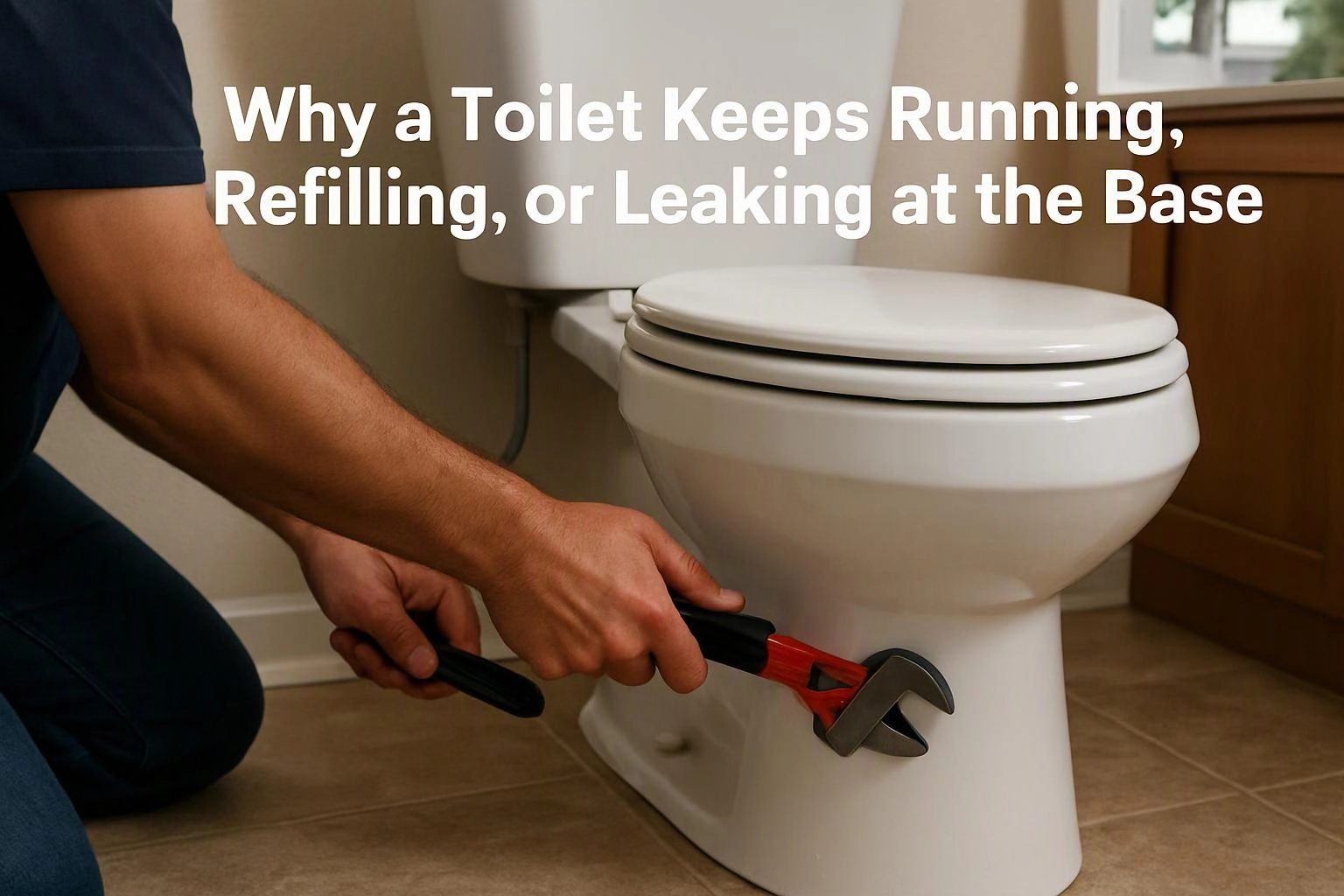
Why a Toilet Keeps Running, Refilling, or Leaking at the Base
A toilet keeps running or refilling when the fill valve, flapper, or tank seal fails to stop water flow. Water at the base can come from a loose connection, failed wax ring, cracked bowl, or toilet that rocks; at PlumbingKentwa.info, we check the source before recommending repair.
Request an EstimateWhat a Running or Leaking Toilet Is Telling You
A toilet that keeps running or leaking shows that a valve, seal, connection, or mounting part isn't controlling water properly.
A running toilet may waste water through the tank and bowl connection. A toilet base leak points to water escaping near the floor, but tank water can also travel down the bowl and look like a floor leak.
Our Toilet Repair process starts by separating tank symptoms from base symptoms. That check helps us choose the right repair and avoid replacing sound parts.
Signs Your Toilet Needs Attention
Toilet symptoms can appear in the tank, bowl, or around the toilet base. The following signs mean the fixture needs closer attention.
These signs can overlap, so one symptom may have more than one source. We trace the water before deciding whether the repair belongs in the tank, supply connection, or floor seal.
Why Does a Toilet Keep Running After Flushing?
A toilet keeps running after flushing when the flapper doesn't seal, the fill valve doesn't shut off, or the tank water level stays too high.
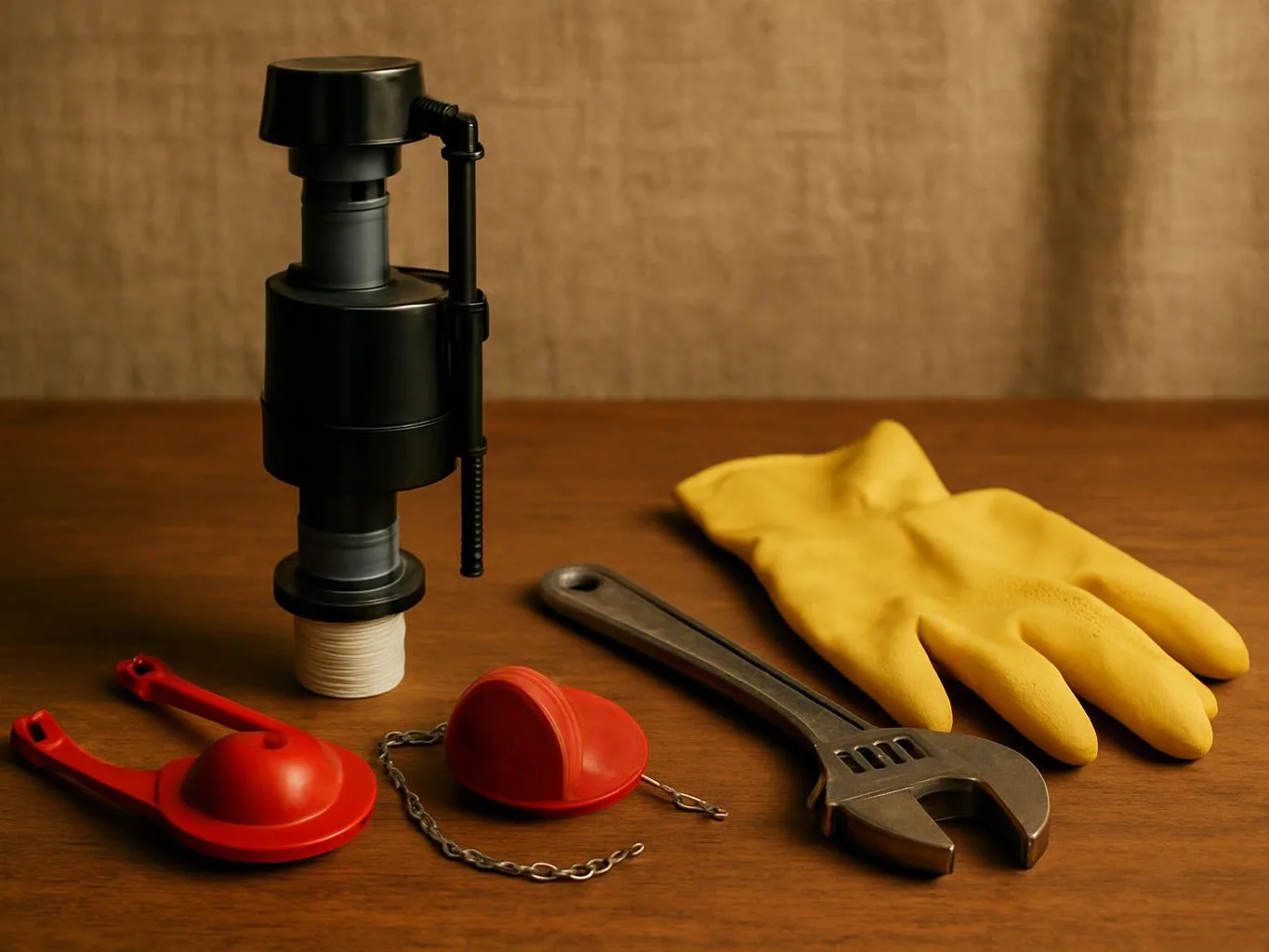
The flush valve opens during a flush and should close when the tank empties. A worn flapper can let water pass into the bowl, while a faulty fill valve can allow continuous water flow.
The flush handle may also remain partly engaged if its chain is too tight or tangled. Water that rises into the overflow tube points to a tank water level or fill valve problem.
Common Causes of a Running or Leaking Toilet
Common toilet problems come from worn tank parts, loose connections, or movement at the floor. Our inspection helps connect each symptom to its actual cause.
Loose tank parts can create water trails that look like a toilet base leak. A damaged flange or cracked bowl needs prompt attention because continued moisture can affect the floor.
Why Does a Toilet Refill on Its Own?
A toilet refills on its own when water slowly escapes from the tank into the bowl, causing the fill valve to open again.
A flapper leak is a common cause of this silent leak. The bowl may look normal, but the tank water level drops until the fill valve adds water again.
We check the flapper, flush valve seat, chain, fill valve, and water level. Fixing the source stops repeated refilling and helps protect against ongoing water waste.
Why Is There Water Around the Base of the Toilet?
Water around the toilet base can come from the supply line, tank connection, bowl seal, condensation, or a damaged toilet flange.
A supply line leak often leaves water near the shutoff valve or tank connection. Loose tank bolts can also let water escape where the tank meets the bowl.
A failed wax ring allows water to leak beneath the bowl during flushing. Condensation can form on a cold tank and drip onto the floor, so the moisture pattern matters.
Why Does a Toilet Rock When You Sit on It?
A rocking toilet usually has movement between the bowl, floor, closet bolts, or toilet flange.
Movement can break the wax ring seal and create a toilet base leak. Tightening hardware without checking the flange can leave the real problem in place or damage the bowl.
We check whether the floor is sound, whether the closet bolts hold the bowl securely, and whether the flange supports the fixture correctly.
How We Diagnose a Running or Leaking Toilet
Our toilet inspection follows the water path from the tank to the floor and subfloor.
This process separates a tank repair from a base repair. It also helps us identify water damage before it spreads into flooring or the subfloor.
When Can You Fix the Toilet Yourself?
You can check visible tank movement and close the toilet shutoff valve when water will not stop.
You can also look under the tank lid for a tangled flapper chain or an obvious water level problem. Keep your hands clear of damaged parts, and don't force a stuck shutoff valve.
PlumbingKentwa.info should handle leaks at the base, damaged flanges, cracked fixtures, and unsafe plumbing repairs. Our team checks the seal and floor support before completing toilet repair.
How to Prevent a Toilet From Running or Leaking
Regular toilet maintenance can reveal worn parts before a small leak becomes water damage. Prevention focuses on the tank, hardware, supply connection, and toilet base.
Do not ignore a toilet that rocks or leaves damp flooring. Early inspection can protect the seal, floor, and subfloor from further damage.
When Should You Call PlumbingKentwa.info for a Running Toilet?
Call our team when the toilet keeps refilling, leaks at the base, rocks on the floor, or cannot be stopped safely.
A running toilet can become a larger plumbing problem when water reaches flooring or the subfloor. A base leak also needs prompt attention when the source is unclear, the bowl is cracked, or the flange has failed.
We inspect the full fixture, explain the confirmed cause, and provide a quote for the needed toilet repair. Use our contact page to request service.
Questions About Running and Leaking Toilets
Can a running toilet cause water damage?
Yes, a running toilet can cause water damage when a supply connection, tank part, or base seal leaks continuously. Water may affect flooring and the subfloor if the source stays hidden.
Should I turn off the water when my toilet keeps running?
Yes, close the toilet shutoff valve when the water keeps running and the valve moves safely. Call our team if the shutoff valve is stuck or the toilet still receives water.
Can a loose toilet cause a leak at the base?
Yes, a loose toilet can damage the wax ring seal and allow water to escape beneath the bowl. Movement may also point to a floor or toilet flange problem.
How can I tell whether a toilet leak comes from the tank or the floor?
A tank leak usually leaves moisture around the tank, bolts, supply line, or bowl connection. A floor leak appears near the toilet base, especially after flushing, but our inspection confirms the source.