Why a Drain Keeps Running Slowly or Clogging Again
A slow or repeatedly clogged drain usually has buildup, a partial blockage, or a pipe problem that basic plunging hasn't fixed. At PlumbingKentwa.info, we check the drain, identify the cause, and explain the right drain cleaning approach.
Request an EstimateWhat Does a Slow or Repeatedly Clogged Drain Mean?
A slow or repeatedly clogged drain means water is meeting resistance that hasn't been fully removed. A slow drain may have a partial blockage near the drain opening, while a recurring clog may sit deeper inside the drain pipe.
Basic plunging can open a narrow path through the blockage without clearing the whole problem. That is why water may drain briefly and then slow again.
Signs Your Drain Problem Needs More Than a Quick Fix
Several symptoms show that a blocked drain needs closer attention. These signs can help us identify whether the problem is local or connected to a larger drain system.
Watch for these conditions:
A single slow fixture often has a nearby cause. Several affected fixtures need a wider drain inspection.
Overflow, strong sewer odor, or wastewater backup calls for prompt attention. Our team can check the affected plumbing fixture and trace the blockage location.
Why Does the Drain Keep Clogging?
A drain keeps clogging when material remains inside the pipe or a pipe defect keeps catching waste. Common causes include:
Tree roots can enter damaged underground piping and restrict the sewer line. A damaged pipe can also shift, crack, or collapse and create a recurring obstruction.
When a clog returns quickly, repeated plunging may not address the cause. We look at the pattern of the blockage and the condition of the drain pipe.
Why Does the Drain Take So Long to Clear?
A drain takes a long time to clear when water can pass only around a blockage or through a narrowed pipe. A partial blockage can leave enough space for slow water flow, but not enough space for normal drainage.
Pipe buildup may cover much of the pipe interior while leaving a small channel open. The blockage location also matters because an obstruction near the drain opening differs from one in a branch drain or sewer line.
Our team checks the drain opening, follows the plumbing layout, and assesses the likely blockage location. That information helps us choose a drain cleaning method that addresses the actual restriction.
What Drain Gurgling and Sewer Smells Can Reveal
Drain gurgling can point to trapped air or restricted flow, while a sewer smell can signal a dry trap, vent issue, or sewer connection problem. The sound often happens when water moves past a restriction and displaces air.
A vent pipe helps balance air pressure in the drainage system. If airflow is restricted, nearby fixtures may gurgle as water moves through the pipes.
Sewer gas can enter a room when a drain trap has dried out or when a connection is damaged. A persistent sewer odor may also involve the sewer line, so our team checks more than the visible fixture.
How We Check a Drain That Keeps Clogging
Our team starts with a drain inspection that connects the symptoms to the plumbing fixture and pipe system. We use the findings to select a safe and suitable cleaning approach.
Our process separates a local clog from a wider drainage problem. We explain the recommended work before proceeding and prepare a service quote based on the actual findings.
For more information about this service, see our Drain Cleaning service page.
When Drain Cleaning Can Solve the Problem
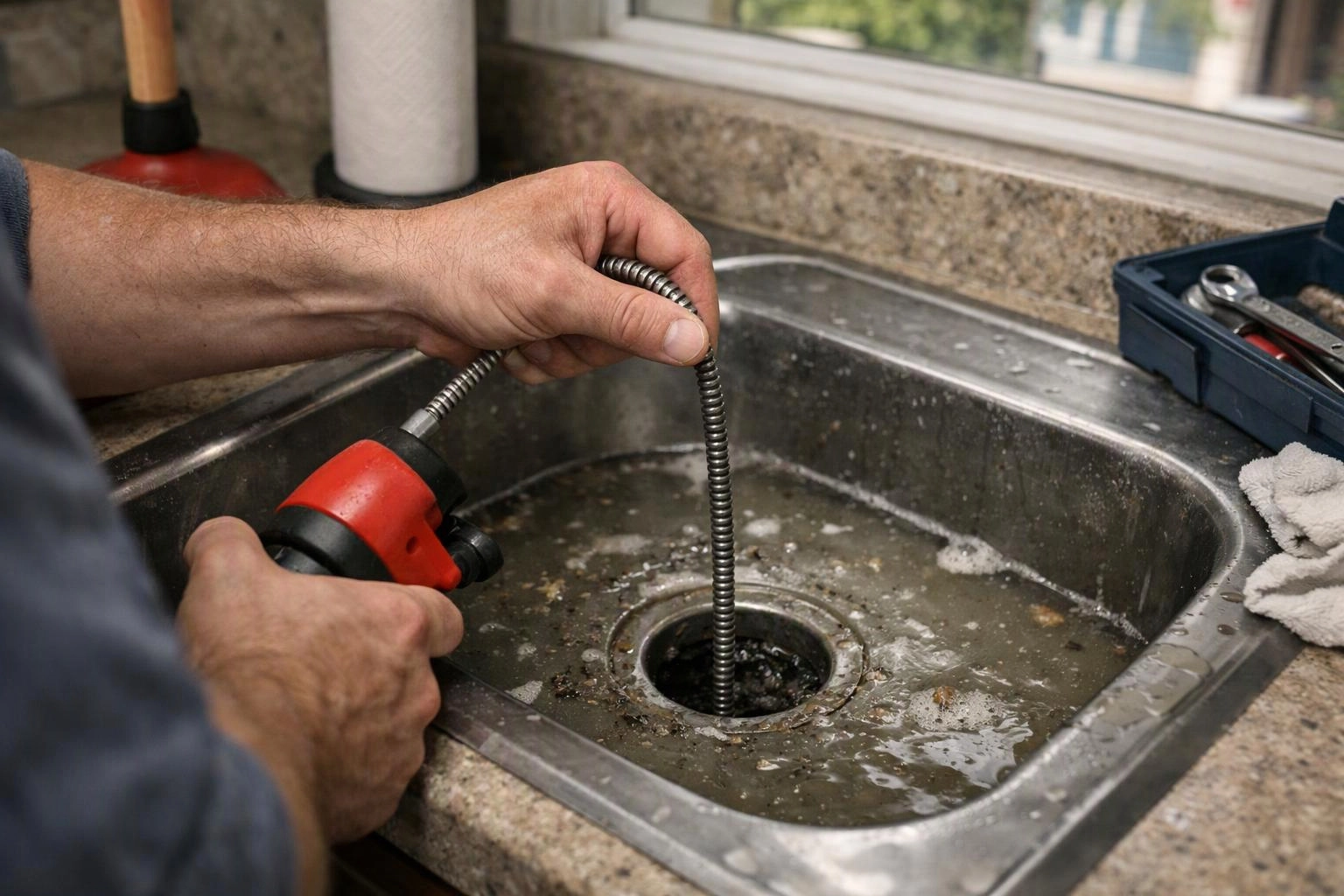
Drain cleaning can solve a recurring clog when removable buildup or an accessible obstruction is restricting the pipe. Mechanical cleaning can break through hair, grease, soap residue, and other drain buildup.
A recurring clog may return if roots, a damaged pipe, or another structural issue remains. In that case, our team may recommend a pipe inspection to check the pipe condition before more cleaning is chosen.
The right method depends on the blockage location and the material causing the restriction. We match the work to the drain instead of treating every clogged drain the same way.
How to Prevent Another Slow or Clogged Drain
Simple drain habits can reduce buildup and help you notice problems early. Prevention works best when you protect the opening and respond to changes in water flow.
Prevention cannot correct a damaged pipe or root intrusion. Early drain maintenance can help our team find those conditions before they cause a larger backup.
Stop using a fixture if wastewater is rising or an overflow is likely. Contact our team when the drain problem keeps returning.
What Changes the Cost of Clearing a Repeated Clog?
The cost of clearing a repeated clog depends on its location, access, cause, pipe condition, and cleaning method; we explain those factors when preparing a quote.
A blockage near an accessible drain opening may need a different method than an obstruction deep in a branch drain or sewer line. Access can also affect the work needed to reach and clean the affected section.
Pipe condition matters because drain cleaning may not correct a cracked, shifted, or collapsed pipe. Our drain inspection helps us explain whether cleaning is suitable and what the service quote includes.
To obtain an exact quote, contact our team and describe the affected fixtures, recurring symptoms, and any overflow or sewer odor. We use that information with our inspection findings to outline the recommended work.
Questions About Slow and Repeatedly Clogged Drains
Can a drain be unclogged without removing the underlying buildup?
Yes, a drain can open without removing all underlying buildup, but the clog may return. Our team checks whether the blockage needs deeper drain cleaning.
Is a slow drain an early sign of a sewer line problem?
Sometimes, a slow drain can be an early sign of a sewer line problem, especially when several fixtures are affected. Our team checks the drainage pattern before choosing the next step.
Why do several drains become slow at the same time?
Several drains become slow at the same time when a shared branch drain or sewer line has restricted flow. A drain inspection helps locate the shared blockage.
When should I stop using chemical drain cleaner?
Stop using chemical drain cleaner when the blockage returns, the drain does not open, or the product may create a hazard during service. Tell our team what product was used before we inspect the drain.