Garbage Disposal Problems: Humming, Leaks, and Slow Drains
Garbage disposal problems and symptoms usually point to a jam, drain blockage, leak, electrical fault, or worn part. At PlumbingKentwa.info, we check the disposal, sink drain, connections, and surrounding plumbing to identify the cause and plan safe repairs.
Request an EstimateWhat Garbage Disposal Problems Should You Watch For?
Garbage disposal problems often show up as humming, leaks, slow draining, unusual noise, sink backups, or a burning smell.
These signs can involve the disposal unit or the connected sink plumbing. The location and timing of each symptom help us narrow down the fault.
Stop using the disposal when the symptom worsens or water reaches nearby cabinets. A careful inspection can prevent damage to the unit and sink plumbing.
What Do Common Garbage Disposal Symptoms Mean?
Garbage disposal symptoms point to different parts, so the sound, location, and timing of the problem help identify the cause.
Our team compares the symptom with the part involved before we recommend a repair. This table shows what each common pattern may indicate.
| Symptom | Parts to inspect | What the pattern may mean |
|---|---|---|
| Humming | Motor, impellers, flywheel | The motor has power but the grinding assembly cannot turn. |
| Water under the sink | Sink flange, drain pipe, dishwasher hose | A seal, connection, or inlet may be leaking. |
| Slow drain or backup | Disposal outlet, drain trap, branch drain | Food debris or a drain blockage may be restricting flow. |
| No response | Reset mechanism, electrical connection, motor | The unit may have lost power or developed an electrical fault. |
Several faults can create similar symptoms. We test the related parts so the repair addresses the actual cause.
Why Does a Garbage Disposal Hum but Not Spin?
A garbage disposal that hums but doesn't spin usually has a jammed grinding assembly or a motor that can't turn it.
Jammed impellers can stop the flywheel when food waste or a foreign object enters the chamber. The electrical supply may still reach the motor, which creates the humming sound.
The reset mechanism may also have tripped after motor strain. We isolate power and inspect the assembly safely because reaching into the grinding chamber can cause serious injury.
Why Is the Garbage Disposal Leaking Under the Sink?
A garbage disposal leaking under the sink usually has a loose connection, failed seal, damaged housing, or leaking dishwasher inlet.
Water at the sink flange can point to a worn rubber gasket or mounting assembly issue. Water at the bottom of the disposal may indicate housing damage that needs a replacement decision.
We also check the drain connection and dishwasher inlet. A loose connection can leak only while the disposal runs, so leak testing must include normal drainage.
Why Does the Garbage Disposal Run but Not Drain?
A garbage disposal that runs but doesn't drain usually has a blockage in the outlet, trap, or connected sink plumbing.
Food debris can collect where the disposal outlet meets the drain pipe. A clog farther along the branch drain can also make the sink back up when the disposal runs.
We trace the flow through the disposal outlet, drain trap, and sink drain. This helps separate a disposal fault from a wider plumbing blockage.
What Causes Garbage Disposal Problems?
Garbage disposal problems commonly come from foreign objects, heavy food waste, drain blockages, worn seals, or electrical faults.
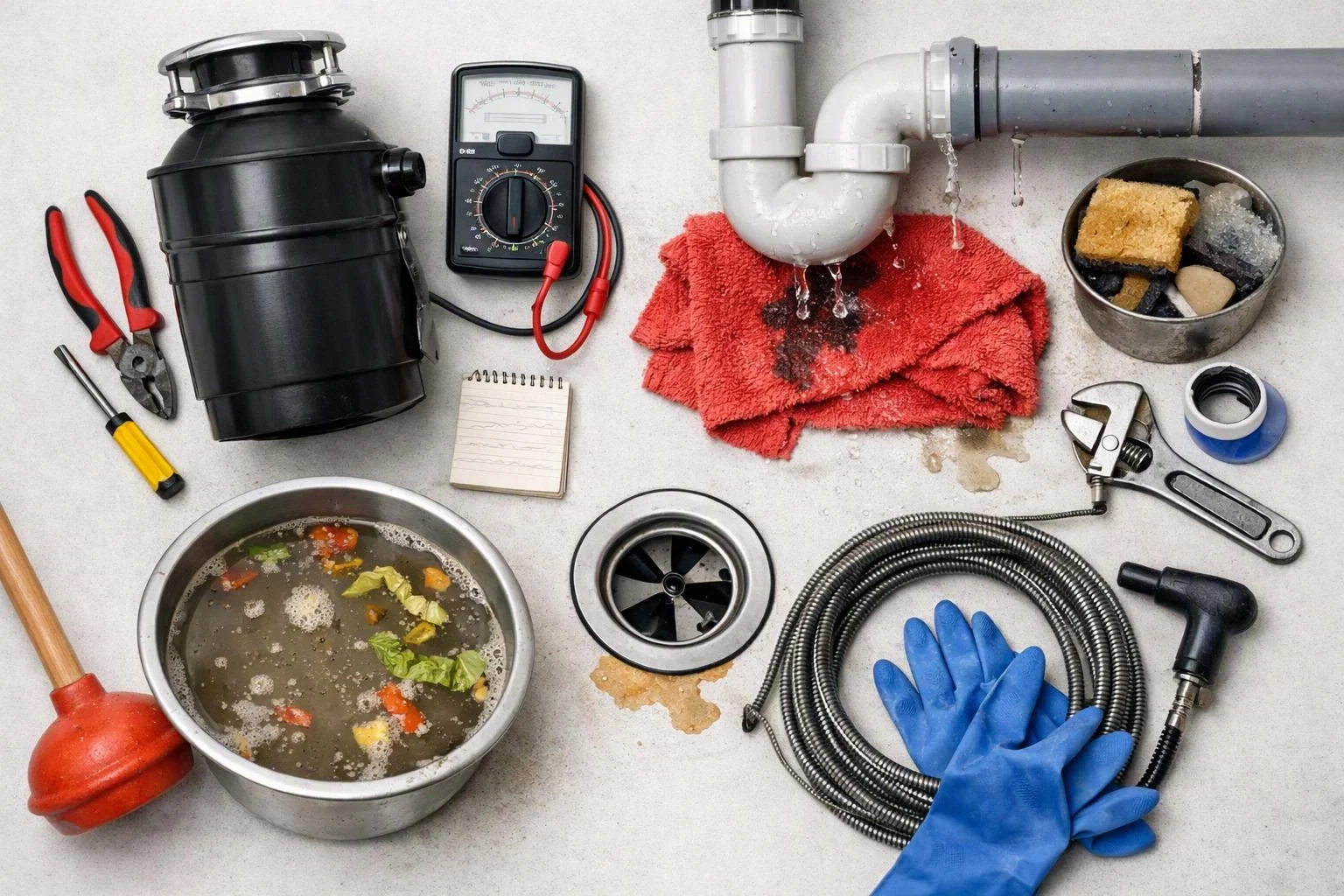
Installation condition also matters because poor alignment can strain connections and the mounting assembly. We look for the cause instead of treating only the visible symptom.
These causes can overlap, especially when a unit has humming, leaks, and slow drainage together. A full inspection gives us a clearer repair path.
How We Check a Garbage Disposal Problem
PlumbingKentwa.info checks the disposal and connected plumbing before we recommend a repair or replacement.
Our process focuses on safe shutoff, clear testing, and the condition of every related connection.
Electrical and plumbing connections require careful handling. We recommend licensed service when testing or repair goes beyond safe homeowner checks.
Which Garbage Disposal Problems Need Repair?
Garbage disposal problems need repair when the unit leaks, stays jammed, loses power, damages connections, or repeatedly blocks the drain.
Motor failure often supports replacement when the housing or grinding assembly is also damaged. A repair may make sense when the unit has a focused seal, connection, or drain blockage problem.
We assess the installation condition, connected plumbing, and failed parts before explaining the replacement decision. Our Garbage Disposal Repair service addresses the disposal and the plumbing around it.
How Can You Prevent Garbage Disposal Problems?
Garbage disposal maintenance focuses on keeping hard objects, grease, fibrous waste, and excessive food scraps out of the unit.
Good habits reduce strain on the motor and help the sink drain properly. They also lower the chance of a jam or clog.
Prevention cannot correct a worn seal or damaged motor. Repeated symptoms call for an inspection before the problem spreads to the sink plumbing.
When Should You Stop Using a Garbage Disposal?
Stop using a garbage disposal when it leaks, smells burned, sparks, makes sharp grinding noises, or causes water to back up.
A water leak can damage the cabinet and nearby connections. A burning smell or electrical hazard can point to motor strain, damaged wiring, or an unsafe electrical connection.
Sharp noise may mean a foreign object has damaged the grinding assembly. Sink overflow also signals a clog that needs safe diagnosis, so call us for Garbage Disposal Repair.
What Changes the Cost of Garbage Disposal Repair?
Garbage disposal repair cost depends on the failed part, access, connected drain condition, electrical troubleshooting, and whether replacement is needed.
Replacement parts, a drain blockage, or a damaged mounting assembly can change the work involved. Installation condition also affects how clearly we can test and restore the plumbing connection.
Our repair quote explains the fault, the work required, and any needed parts. Contact us for a quote based on the inspection findings.
How to Get Help With a Garbage Disposal Problem
PlumbingKentwa.info can inspect the garbage disposal, explain the fault, and provide a quote based on the work required.
Tell us whether the unit hums, leaks, runs without draining, or causes the sink to back up. Our team will focus the inspection on the disposal, sink drain, electrical connection, and related plumbing.
Use our contact page to request help with a disposal problem and arrange the next step.